Midjourney Medical turns AI profits into a 60-second ultrasound scanner


Midjourney has announced Midjourney Medical, an Ultrasonic CT project that aims to make whole-body scanning as quick as a spa visit. The ambition is real, but diagnostic claims still need clinical evidence and FDA clearance.
The short version
Midjourney has launched Midjourney Medical, a new division built around an ultrasound-based whole-body scanner it calls Ultrasonic CT. The company says the goal is a 60-second scan in water, no radiation, no large magnets, and a first San Francisco spa location near the end of 2027. The important caveat: this is an ambitious prototype and research roadmap, not a clinically proven MRI replacement yet.
Key takeaways
- Midjourney says its scanner uses sound, water, and a ring of underwater sensors to reconstruct 3D body maps.
- The company is starting with body composition maps while it submits test results to the FDA for expanded capabilities.
- Butterfly Network confirms that the current prototype uses 40 Butterfly Ultrasound-on-Chip imaging modules per system under a co-development agreement.
- Midjourney's own roadmap targets a San Francisco spa in 2027, broader city expansion in 2028, and around 50,000 scanners by 2031.
- The real story is not "AI replaces MRI today"; it is a consumer AI company trying to turn compute, imaging, UX, and subscription revenue into preventative health infrastructure.
What Midjourney announced
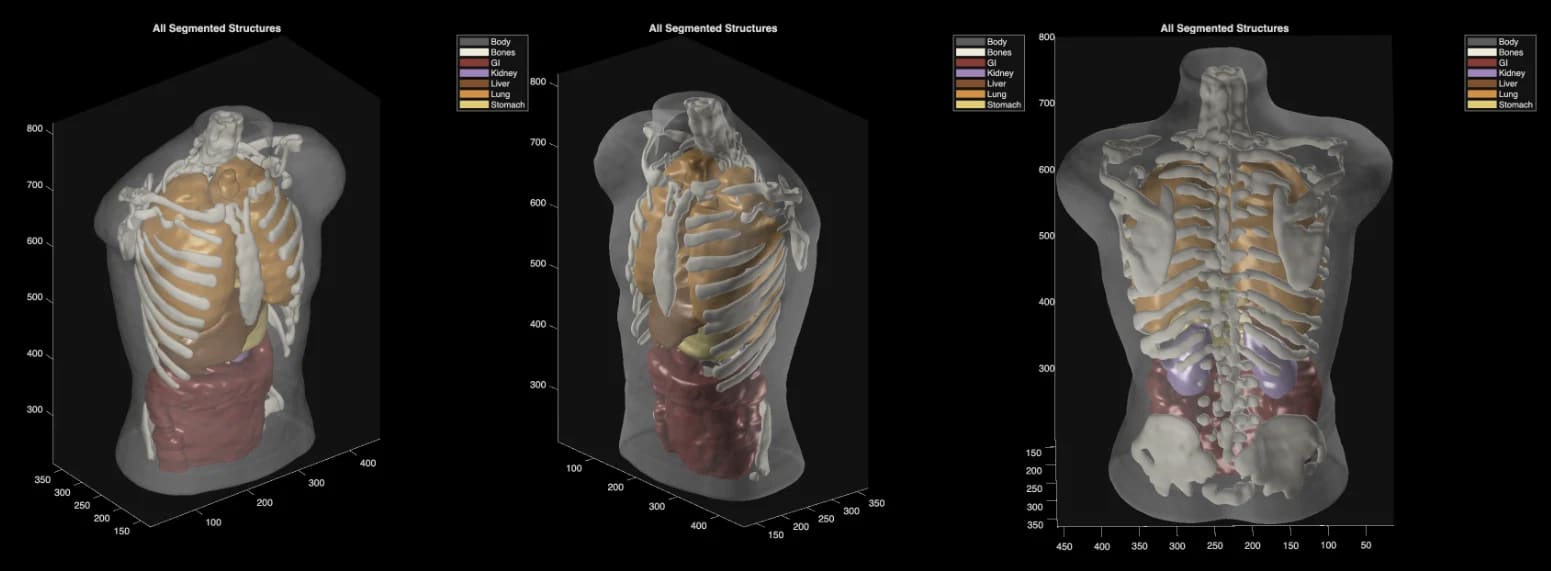
Midjourney's announcement frames the scanner as a new kind of medical imaging machine: a person steps into a shallow pool, descends through water, and passes through a sensor ring that sends ultrasonic waves through the body from many angles. Midjourney says the target is a scan that takes no more than 60 seconds and reconstructs a 3D map of the body down to a fraction of a millimeter.
The public pitch is deliberately consumer-facing. Midjourney is not starting with a hospital machine. It is planning a Midjourney Spa in San Francisco, with hot tubs, saunas, cold plunges, and scanner rooms where the scan becomes part of a wellness visit. The company says the first location should open around the end of 2027 and that the next 12 months are focused on refining algorithms, hardware, research trials, and a second-generation design.
The most interesting technical detail is that this is not just "AI image generation, but medical." Midjourney says the hard problem is ultrasound reconstruction: collecting huge amounts of acoustic data and turning changing waveforms into images. The Verge reported that David Holz said only about a dozen people had been scanned at the time of the reveal, which is exactly why this should be treated as early hardware, not settled medicine.
Why it matters
If Midjourney can make high-frequency body scanning cheap, fast, and comfortable, the healthcare workflow changes. Instead of a scan being a rare, expensive, anxiety-loaded event, it could become longitudinal data: how muscle, fat, organs, veins, inflammation, or recovery patterns change over time.
That is the optimistic version. The hard version is regulation, evidence, false positives, privacy, and clinical interpretation. Whole-body screening of healthy people can create incidental findings that lead to unnecessary follow-ups. Ultrasound also has physical limits: bone, air, and deep tissue can make some structures hard to image. A beautiful 3D volume is not the same thing as a validated diagnosis.
For LinkLoot readers, the practical angle is this: watch Midjourney Medical as an infrastructure bet, not as a finished medical product. The company is trying to combine four assets that AI labs increasingly have: compute, reconstruction software, consumer onboarding, and recurring revenue. That pattern may matter far beyond this one scanner. For more AI infrastructure shifts, start with the agent-tools guide: /guides/ai-agent-tools.
| Claim | What is confirmed | What still needs proof |
|---|---|---|
| 60-second whole-body scan | Midjourney states this as the product goal | Independent clinical performance data |
| No radiation or large magnets | Ultrasound-based design supports this claim | Whether image quality can cover all intended use cases |
| MRI-like body maps | Midjourney shows reconstructed examples and says it aims to rival MRI in many ways | Peer-reviewed comparisons across body regions |
| Body composition first | Midjourney says this is the initial commercial/regulatory path | FDA-cleared diagnostic use |
| 50,000 scanners by 2031 | Midjourney states this as an ambition | Manufacturing, reimbursement, staffing, privacy, and regulation |
The Butterfly Network signal
Butterfly Network's statement makes the project more concrete. The company says the current scanner prototype incorporates 40 Butterfly Ultrasound-on-Chip imaging modules per system, licensed under a co-development agreement. Radiology Business also points to Butterfly's earlier SEC-disclosed agreement with Midjourney, with up to $74 million in expected payments over five years.
That matters because it separates the announcement from pure concept art. There is a known ultrasound hardware partner, a disclosed commercial agreement, and a prototype architecture. It still does not prove clinical superiority, but it makes the launch materially different from a speculative deck.
The claims to slow down
The viral posts around Midjourney Medical are selling the story as if the future of healthcare has already flipped. That is too fast. Midjourney itself says diagnostic medical capabilities normally need FDA approval and that the first step is detailed body composition maps. The company also says it will submit regular test results to the FDA for increased capabilities.
The most useful framing is:
- confirmed: Midjourney announced a full-body ultrasound/Ultrasonic CT project;
- confirmed: the project is tied to a spa-style first location planned for 2027;
- confirmed: Butterfly Network is supplying ultrasound-on-chip modules for the prototype;
- unproven: the scanner outperforming MRI as a general diagnostic replacement;
- unproven: the 30% death-reduction ambition as a clinical outcome rather than a long-term vision.
That does not make the project small. It makes it worth watching with adult filters on.
What to verify before you buy the hype
Before treating Midjourney Medical as a healthcare breakthrough, look for five signals:
- FDA filings or clearances for specific diagnostic uses,
- peer-reviewed performance data against MRI, CT, DEXA, and conventional ultrasound,
- published limitations by body region and tissue type,
- pricing, privacy, data retention, and sharing policies,
- clinical workflow details: who reads scans, who follows up, and who carries liability.
The best outcome would be a cheap, safe, repeatable scan that doctors can actually use. The worst outcome would be consumer-grade whole-body screening that creates noise, anxiety, and unvalidated confidence. The difference will be evidence.
Source check
Midjourney's official announcement confirms the new Midjourney Medical division, the Ultrasonic CT framing, the 60-second target, the spa concept, the 2027 San Francisco timing, the 2028 and 2031 roadmap, and the statement that diagnostic expansion requires FDA work.
Butterfly Network confirms the hardware collaboration and says the current prototype uses 40 Butterfly Ultrasound-on-Chip imaging modules per system. Radiology Business adds medical-industry context, including the up-to-$74 million Butterfly agreement, radiologist skepticism, and the distinction between body composition maps and diagnostic-grade imaging.
The Verge and The Next Web independently covered the launch, highlighting the hardware-first nature of the product, the early scan count, the spa plan, and the fact that Midjourney's own pitch still leaves major regulatory and clinical questions open.
No. Midjourney is aiming for MRI-like usefulness in many ways, but the scanner is still early and diagnostic medical use needs evidence and regulatory clearance.
Try the related loot
Make AI Image Prompts Work Better with the 6-Part MOSAIK Framework