Pyodide 314.0 lets Python WASM wheels ship through PyPI


Pyodide 314.0 adds PyPI-distributed WebAssembly wheels for browser Python, turning PEP 783 into a practical packaging path for C, C++, and Rust extensions.
Pyodide 314.0 makes it possible for Python package maintainers to publish Pyodide-compatible WebAssembly wheels directly to PyPI, then install them at runtime in browser Python projects. The change builds on PEP 783 and the new pyemscripten_* platform tags. For users, the practical result is less waiting for Pyodide maintainers to build every compiled dependency by hand.
Key takeaways
- Pyodide 314.0 moves to a Python-version-based scheme: this release corresponds to Python 3.14 and ships Python 3.14.2.
- PEP 783 support means packages can publish
pyemscripten_2025_0andpyemscripten_2026_0wheels through PyPI. cibuildwheelalready supports PyEmscripten ABIs, with Pyodide noting that the 2026 ABI is still tied to prerelease configuration until a follow-up stable workflow lands.- Pyodide also adds experimental socket operations in Node.js, better JavaScript bigint round-tripping, resource-management interop, and broader array-like
JsProxysupport. - The trade-off is real: browser Python can now install more compiled code, so teams should review package provenance and runtime sandbox assumptions before embedding it in user-facing workflows.
Practical LinkLoot angle
This is useful for browser-first demos, education tools, JupyterLite notebooks, internal calculators, and client-side AI/data workflows that need Python packages with native extensions. The old bottleneck was distribution: if a compiled dependency was not in Pyodide's maintained package set, teams often had to wait, fork, or host their own wheel path. PyPI distribution makes the workflow closer to normal Python packaging.
| Option | Best use | Limitation | Source |
|---|---|---|---|
| Pure Python package in Pyodide | Fast browser demos and teaching environments | Only works when no compiled extension is required | Pyodide docs/release notes |
| PyEmscripten wheel on PyPI | C, C++, Rust, or PyO3-backed packages in browser Python | Requires maintainer build support and ABI awareness | Pyodide 314.0 release |
| Custom hosted wheel | Private or experimental builds | More ops work and weaker discoverability | Prior Pyodide workaround |
| Server-side Python API | Heavy compute, secrets, or strict control | Adds backend hosting and latency | Practical alternative |
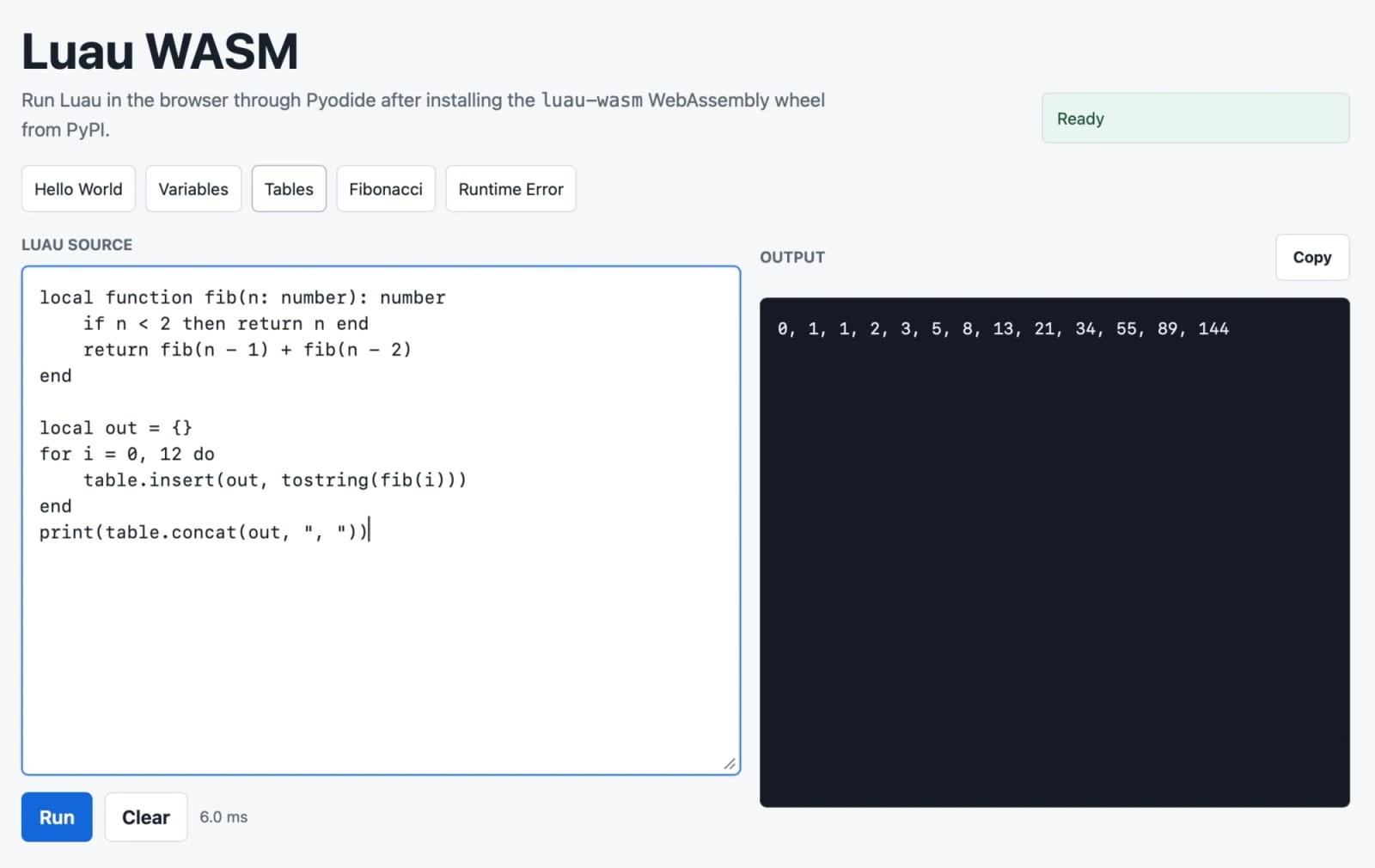
Simon Willison's follow-up shows why the release matters in practice: he packaged an experimental Luau WebAssembly build, published it to PyPI, and installed it from Pyodide with micropip. That is the sort of small test that turns a standards change into a workflow developers can copy.
What to verify before you act
Check whether your dependency actually publishes a pyemscripten_*_wasm32 wheel before planning a migration. The Pyodide release notes also call out breaking details: pyodide.asm.js is now pyodide.asm.mjs, classic workers are no longer supported for direct module usage, OpenSSL is no longer part of the standard-library path, and some hashlib algorithms may disappear if they depended on OpenSSL.
For security review, treat a WebAssembly wheel like any other compiled package artifact. PyPI distribution improves reach, not trust. Pin versions, inspect the maintainer, read the build workflow, and keep browser sandbox risk separate from package supply-chain risk.
Source check
The Pyodide release notes confirm the 314.0 release, PEP 783 packaging support, Python 3.14 alignment, Node.js socket experiments, and interop changes. Simon Willison's write-up independently demonstrates a PyPI-published pyemscripten_2026_0_wasm32 wheel installed through Pyodide and notes early package adoption. The Hacker News thread confirms developer attention and surfaces practical caveats around caching, JupyterLite, and sandbox assumptions.
Package maintainers can publish Pyodide-compatible WebAssembly wheels to PyPI using PEP 783 platform tags.
For more browser and automation tooling picks, see LinkLoot's guide to AI workflow automation.
Try the related loot
Scrape Changing Websites with Anansi Self-Healing Selectors and MCP