ChatGPT Dreaming Memory Rolls Out With New Review Controls


OpenAI is rolling out a more scalable ChatGPT memory system that synthesizes context over time, expands beyond Plus and Pro, and makes memory review more important.
OpenAI is rolling out a new ChatGPT memory architecture called Dreaming that synthesizes useful context from past conversations and keeps it fresher over time. The June 4, 2026 release is available first to Plus and Pro users in the United States, with more countries and Free and Go users planned over the following weeks. The practical change is that ChatGPT memory becomes less like a manual notes list and more like a reviewable context layer.
Key takeaways
- OpenAI says Dreaming improves memory freshness, continuity, relevance, and scalability for long-running ChatGPT use.
- The rollout starts with Plus and Pro users in the US, then expands to additional countries and Free and Go users over the coming weeks.
- OpenAI says recent efficiency work reduced the compute needed to serve Dreaming to Free users by about 5x.
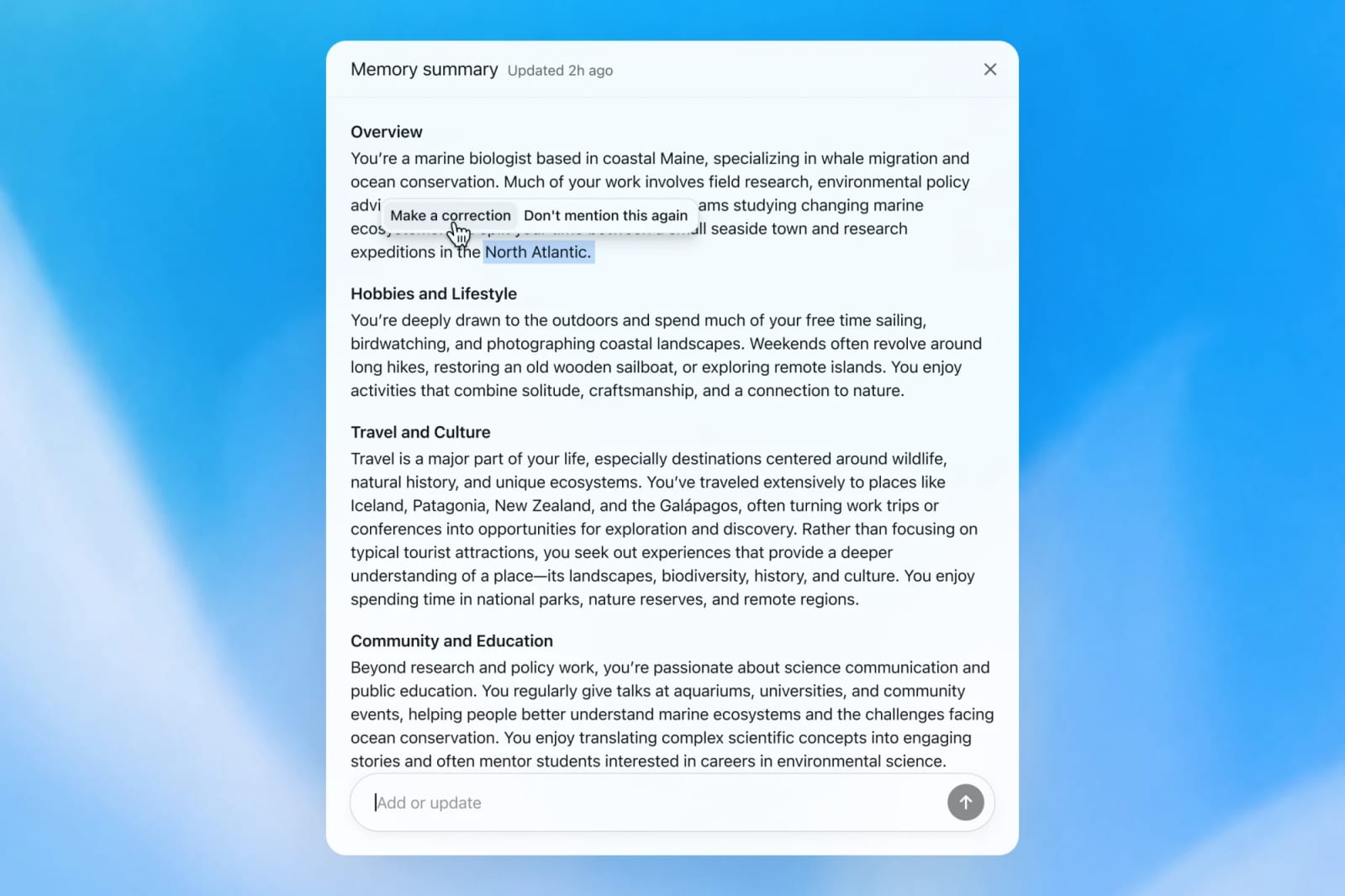
- The new memory summary page lets users review, correct, dismiss, and add context, but OpenAI's FAQ says the summary may not include everything ChatGPT can reference from chats.
- Tech Times independently covered the rollout and highlighted the control gap between deleting a chat, deleting a memory, and using Temporary Chat.
Practical LinkLoot angle
Memory is now a workflow setting, not just a convenience feature. If you use ChatGPT for client work, research, content planning, product decisions, or personal operations, stronger memory can reduce repeated setup and make recommendations more specific. It also means sensitive context can influence later answers unless you deliberately use Temporary Chat, review memory summaries, and separate model-training controls from memory controls.
For solo operators and teams, the best use is repeatable context that is helpful across sessions: tone preferences, project constraints, audience definitions, tool stacks, brand rules, and recurring decision criteria. The risky use is sensitive one-off context: health, legal, finance, private customer details, confidential strategy, and anything that should not shape unrelated future chats.
| Memory control | Best use | What to check | Source |
|---|---|---|---|
| Memory summary | Review and correct what ChatGPT appears to remember | The summary may not show every usable context item | OpenAI FAQ |
| Temporary Chat | Handle one-off sensitive conversations | It does not use or create memory for that chat | OpenAI FAQ |
| Turn Memory off | Stop memory-based personalization | Deletion of synthesized context may not be instant | OpenAI FAQ |
| Delete related sources | Reduce lingering stale context | You may need to remove memories plus chats, files, or connected app sources | OpenAI FAQ |
What to verify before you act
Check whether the feature is available for your plan, country, and workspace before changing workflows around it. OpenAI's announcement names Plus and Pro users in the US as the first rollout group and says Free and Go users follow over the coming weeks. Team, Enterprise, and Education admins should also review workspace-level memory controls before allowing sensitive data into long-running assistant workflows.
Review the privacy boundaries separately. Turning off or editing memory is not the same as managing model-training settings, deleting a chat, or using Temporary Chat. If you handle confidential work, create a simple rule: reusable context can go into memory; sensitive one-off context goes into Temporary Chat or stays out of ChatGPT.
Source check
OpenAI's announcement confirms the Dreaming rollout date, availability sequence, memory goals, memory summary page, and 5x compute-efficiency claim. The OpenAI Memory FAQ confirms user controls, including memory settings, Temporary Chat, memory summaries, and the limits of what the summary shows. Tech Times independently reports the release and adds privacy-focused context about synthesized memory, chat deletion, and control confusion; treat its security framing as analysis, not as a confirmed architecture disclosure from OpenAI.
Dreaming is OpenAI's background memory synthesis system for ChatGPT. It organizes useful context from past conversations so future chats can start with more relevant context.
For a practical setup, pair this with LinkLoot's AI workflow automation guide and document which prompts should use memory, which should use Temporary Chat, and which should stay outside the assistant.
Try the related loot
Best provider for OpenClaw in 2026: what to buy, what to avoid, and what actually saves money