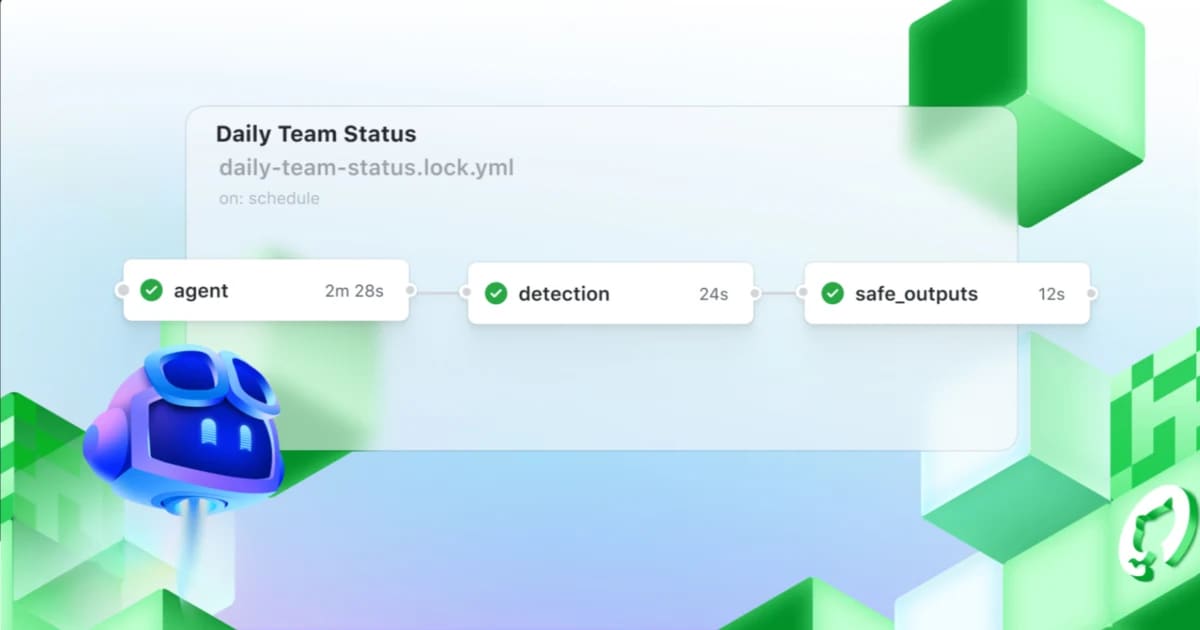
GitHub Agentic Workflows v0.77.4 adds token guardrails and Copilot SDK support


GitHub Agentic Workflows v0.77.4 adds per-workflow token guardrails, a Copilot SDK engine, Anthropic Workload Identity Federation, and reusable skills for safer repository automation.
What changed in GitHub Agentic Workflows
GitHub Agentic Workflows v0.77.4 is a developer automation release focused on cost control, authentication, and reusable agent setup. The official update says the May 31 release adds a per-workflow 24-hour effective-token guardrail, a new copilot-sdk engine option, Anthropic Workload Identity Federation, and manifest support for includes, skills, and agents. For LinkLoot readers, the useful part is not another agent demo; it is the move toward repository automation that can be composed, governed, and capped before it burns budget.
Key takeaways
- The release adds a configurable 24-hour effective-token guardrail for individual workflows.
- A new
engine: copilot-sdkfrontmatter option gives workflows access to the Copilot SDK runtime. - Claude-engine workflows can use Anthropic Workload Identity Federation instead of storing long-lived API keys in repository secrets.
- The
aw.ymlmanifest can now composeincludes,skills, andagentsacross repositories. - GitHub's separate reference docs describe the
agentic-workflowsskill as a way to create, update, import, and debug workflows from Copilot, Copilot CLI, or VS Code Agent Mode.
Practical LinkLoot angle
This release is worth watching if your automation stack has moved from "ask an assistant" to "let an agent maintain a repository." Token guardrails make recurring workflows easier to approve because each workflow can carry its own cost boundary. Workload Identity Federation reduces the need to park long-lived Anthropic keys in repo secrets. The manifest and skill changes make repeatable agent workflows easier to share across repositories without copying every instruction by hand.
| Capability | Best use | Limitation | Source |
|---|---|---|---|
| Effective-token guardrail | Cap runaway daily workflow spend | Teams still need alerting and review around failed runs | GitHub weekly update |
copilot-sdk engine | Build workflows directly against Copilot SDK runtime patterns | New integration path; verify access and support in your environment | GitHub weekly update |
| Anthropic WIF auth | Avoid long-lived Claude API secrets in repositories | Requires correct identity and provider setup | GitHub weekly update |
agentic-workflows skill | Create, update, import, and debug workflow definitions | Skill prompts are still operational instructions that need review | GitHub reference docs |
A practical rollout path is simple: pick one low-risk maintenance workflow, add an explicit token cap, run it on a non-critical repository, and compare the generated .lock.yml, permissions, safe-output behavior, and failed-run logs before expanding. For teams building repeatable agent systems, pair this with LinkLoot's AI workflow automation guide and treat each workflow as production automation, not a chat transcript.
What to verify before you act
Check the exact gh-aw version you are running before adopting any v0.77.4-specific frontmatter or manifest fields. Confirm that your GitHub Actions permissions, identity provider settings, and Copilot or Claude engine access match the workflow you plan to run. If cost control is the reason for upgrading, test the token guardrail with a deliberately bounded workflow first and inspect whether failures, retries, and reusable workflow callers are counted the way your team expects.
Also review any generated skill or workflow file before merge. The source docs describe workflow creation, debugging, and import flows, but the safe operating model still depends on human review, repository permissions, secret boundaries, branch protection, and CI checks.
GitHub's update lists per-workflow token guardrails, a Copilot SDK engine option, Anthropic Workload Identity Federation, manifest composition for includes, skills, and agents, plus several reliability fixes.
Try the related loot
Scrape Changing Websites with Anansi Self-Healing Selectors and MCP