GitHub Copilot adds cost-aware model routing and agent workflows


GitHub Copilot is rolling out cost, quality, and response-time tiers for automatic model selection alongside broader code-review, Dev Container, and agent-session controls.
GitHub Copilot is rolling out three automatic model-selection tiers—efficiency, balance, and intelligence—that let developers choose how Copilot weighs cost, quality, and response time. The same release also expands code review, Dev Container-based agent sessions, pull-request creation, and administrative usage controls.
GitHub Copilot makes automatic model choice explicit
The new tiers are available across VS Code, Copilot CLI, and the Copilot app. GitHub says all three tiers select from the same available models; the setting changes the routing preference rather than exposing a separate model catalog. That gives teams a practical control for deciding whether a task should favor lower spend, a middle trade-off, or maximum response quality.
For organizations using usage-based billing, the release adds a budget-increase request flow. When a user reaches an AI credit limit, an owner or billing manager can approve, adjust, or deny a request. Approval restores access to AI credits. GitHub says the feature is generally available for Copilot Business and Enterprise plans with usage-based billing, but it is unavailable to enterprises with managed users.
Code review keeps a clearer history of findings
Copilot code review now separates open findings, issues resolved since the previous review, and problems found later in existing changes. It can auto-resolve its own comments when subsequent commits address them, while respecting replies that ask to keep an issue open. Reviews can also use shell tools for validation, and Lite reviews combine findings from multiple agents.
When developers accept an eligible batch of suggestions, Copilot can generate a commit title and optional description. The result is a tighter loop from review finding to reviewed change, with less manual cleanup in the commit history.
Agent sessions move closer to the project environment
The Agents window is gaining local Dev Container support. Developers can run an agent with the tools and dependencies declared by a project instead of relying on the host environment; Docker and a supported Dev Container configuration are required, and the rollout is gradual.
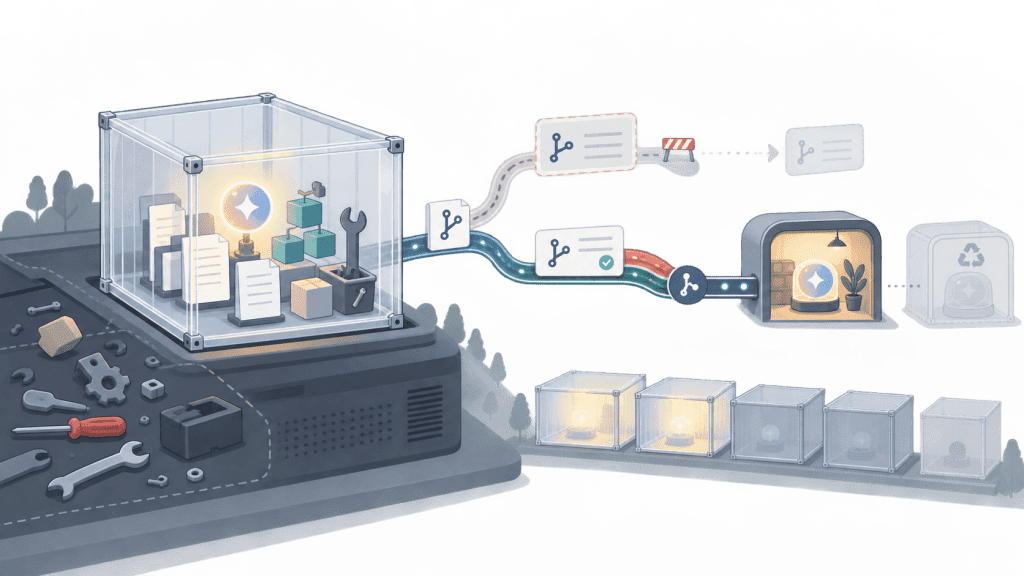
The same release adds pull-request creation from Agent Host sessions. Developers can review the generated title and description, select draft status, and create the pull request directly or ask the agent to do it. Inactive sessions can also be marked Done after their pull requests merge, with optional deletion after a separate grace period.
Visual Studio Code 1.138 independently documents the related agent-session rollout, including Dev Containers, session cleanup, and expanded Codex support. Its release notes say the update is rolling out gradually, so availability will vary by account, client, and enabled preview setting.
What teams should check
- Decide whether automatic model selection should favor efficiency, balance, or intelligence for each repository or team.
- Review credit-limit policies and identify who can approve budget increases.
- Test Dev Container agent sessions against the same images used by local development and CI.
- Check the rollout status of code-review shell validation and session cleanup before changing runbooks.
The immediate change is control: Copilot now exposes more of the routing, review, and session lifecycle decisions that used to sit behind a single agent workflow. Teams should validate the available tiers and permissions in their own Copilot and VS Code clients before standardizing them.
Sources
Try the related loot
Give OpenClaw Agents Pre-Verified Web Actions with Actionbook