GitHub Copilot adds flex allotments and a new Max plan ahead of June billing changes


GitHub says Copilot individual plans will switch to AI Credits on June 1, add flex allotments to Pro and Pro+, and introduce a new Max tier for heavier usage.
GitHub says its individual Copilot plans will move to usage-based billing on June 1, 2026, using GitHub AI Credits instead of the current request-based model. The company is also adding flex allotments to Pro and Pro+ at the same monthly prices and launching a new Max plan for higher-volume users. For developers who rely on Copilot Chat, CLI, cloud agent, or agentic workflows, this matters more than a cosmetic plan rename because usage now maps more directly to model choice and session size.
Key takeaways
- GitHub will switch individual Copilot plans to AI Credits-based billing on June 1, 2026.
- Pro keeps its $10 monthly price but moves to 1,500 monthly AI Credits total; Pro+ moves to 7,000; the new Max plan offers 20,000.
- GitHub splits included usage into base credits plus a variable flex allotment, with base credits locked to subscription price.
- Code completions and next edit suggestions remain unlimited on paid plans, but chat, CLI, cloud agent, Spark, Spaces, and third-party coding agents consume credits.
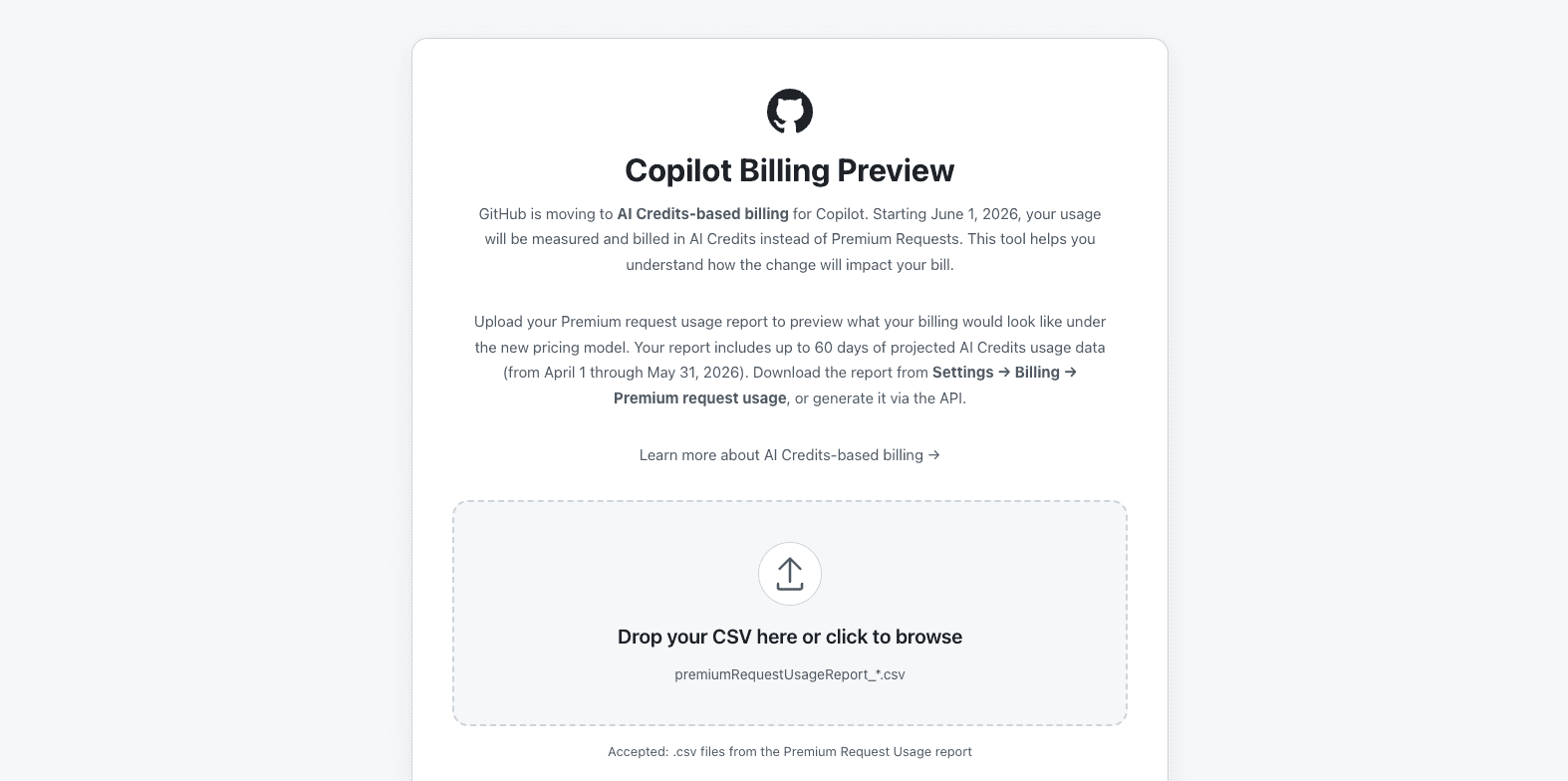
- GitHub provides a billing preview workflow, including CSV export and a browser-side preview tool, so users can estimate spend before the switch.
What changes on June 1
GitHub frames the update as a response to a practical problem: longer agent runs, multi-step tasks, and pricier frontier models can burn through old request allowances faster than many individual users expected. Its answer is a pricing model tied to AI Credits and a flex layer that can expand included usage above the subscription-price baseline.
| Plan | Monthly price | Base credits | Flex allotment | Total monthly AI Credits |
|---|---|---|---|---|
| Copilot Pro | $10 | 1,000 | 500 | 1,500 |
| Copilot Pro+ | $39 | 3,900 | 3,100 | 7,000 |
| Copilot Max | $100 | 10,000 | 10,000 | 20,000 |
GitHub says base credits do not change, while flex allotments can change over time as model economics and efficiency improve. That is useful if you want more included headroom without manually buying overages every month, but it also means the non-base part of the bundle is not a forever guarantee.
Why it matters
If you mostly use code completions and short chats, this change may feel small. If you use Copilot CLI, cloud agent, or longer model-assisted sessions, the change is more material because heavier tasks and pricier models now translate into clearer metered consumption.
A simple decision workflow looks like this:
- Export your usage report from GitHub.
- Run the CSV through the official billing preview tool.
- Check whether your real usage fits Pro, Pro+, or Max before June 1.
- Decide whether a lighter model can handle routine work and reserve expensive models for deeper tasks.
That workflow matters because GitHub explicitly says model choice, conversation length, and agentic features affect AI Credit burn. If your current habit is “default to the smartest model for everything,” this update gives you a reason to separate high-stakes tasks from routine ones.
What to verify before you act
Check your plan type first. GitHub says monthly subscribers are migrated automatically on June 1, while existing annual subscribers get separate renewal options and can see changes around model multipliers.
Also verify which features are actually driving your bill. GitHub’s docs say code completions and next edit suggestions stay unlimited on paid plans, but Copilot Chat, Copilot CLI, Copilot cloud agent, Spaces, Spark, and third-party coding agents consume credits. If your spending is mostly coming from chat and agents, changing your editing habits will not help much; changing model choice and agent frequency will.
Finally, treat the preview numbers as estimates, not an invoice. GitHub notes that the preview tool is illustrative and final charges come from actual usage processed by its billing platform.
Practical LinkLoot angle
This is one of those pricing changes that becomes operational quickly for solo builders and small studios. If you run AI-heavy coding sessions every day, a quick budget spreadsheet is now part of setup, just like choosing CI minutes or cloud regions.
If you want a broader system for deciding where agents save time versus where they just create stealth spend, pair this with LinkLoot’s guide to practical automation tradeoffs: /guides/ai-workflow-automation.
Not exactly. Paid plans still include monthly AI Credits, and extra usage only matters after you burn through the included allowance.
Try the related loot
This JS Agent Turns Any Website Into an AI Copilot