agentmemory gives Claude Code, Codex, Hermes, and OpenClaw a real memory layer
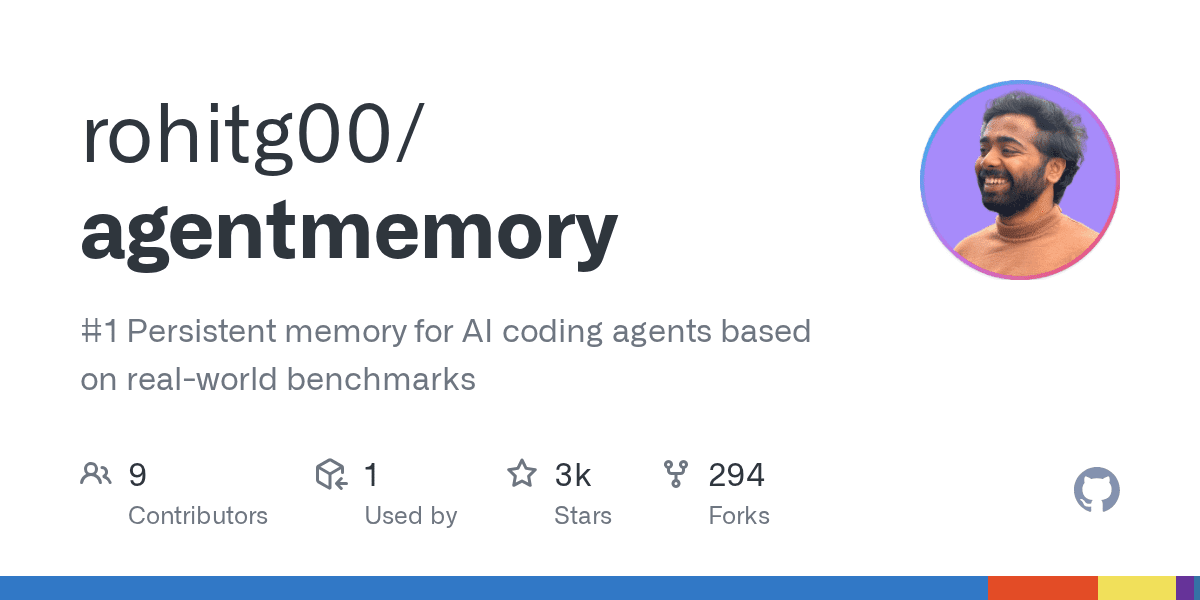
agentmemory is one of the more interesting open-source upgrades for coding agents right now: it captures sessions, compresses observations into searchable memory, and injects relevant context back into future runs. The real value is not ju...
What you get from it
agentmemory is one of the more interesting open-source upgrades for coding agents right now: it captures sessions, compresses observations into searchable memory, and injects relevant context back into future runs. The real value is not just lower token burn — it is getting past the brittle limits of static memory files without locking yourself into a full proprietary runtime.
agentmemory is the kind of project that matters because it fixes a boring but expensive problem: coding agents forget too much, too fast. Instead of stuffing massive memory files into context every session, it captures what happened, stores it locally, and retrieves only the relevant pieces later.
What it actually does
- records agent sessions automatically via hooks
- compresses observations into searchable memory
- supports Claude Code, Codex CLI, Hermes, OpenClaw, and other MCP/REST-capable agents
- exposes a local MCP + REST surface instead of forcing one editor or one runtime
- ships with a local viewer so you can inspect what the system remembers
Why people care
The repo has already crossed 2.8k+ GitHub stars, and the pitch is easy to understand: fewer wasted tokens, less repeated explanation, and better recall across long coding projects.
From the project’s own benchmark material:
- 95.2% R@5 on retrieval-only LongMemEval-S
- 92% fewer input tokens per session is the headline claim in the README/site
- internal quality docs show a drop from 22,610 tokens with built-in memory/grep to 3,142 tokens for retrieved results in one 240-observation evaluation
- at 1,000 observations, the project argues most static built-in memory becomes effectively invisible while searchable memory still covers the full corpus
Security and privacy read
This looks stronger than many “memory for agents” projects on the privacy front, but there are still a few things worth saying plainly:
- good: self-hosted by default, no external database stack required
- good: Apache-2.0 licensed and openly benchmarked with reproducibility docs in the repo
- good: the comparison docs explicitly claim secret/privacy filtering before storage and audit trails for mutations
- good: the project publishes a real security policy with private reporting channels and version support guidance
- watch out: memory is still stored locally on disk, so sensitive prompts/tool outputs should be treated as sensitive local data
- watch out: peer-to-peer sync/federation and external model providers change the trust boundary immediately
- watch out: installation commonly starts with
npx, and the repo also documents upgrade flows that can mutate the runtime/workspace intentionally
Best use cases
- long-running Claude Code or Codex projects
- teams bouncing between multiple coding agents
- projects where architecture decisions get forgotten between sessions
- workflows that keep hitting
/compact, memory caps, or context-window waste
Why this is more than hype
A lot of memory projects stop at “vector DB for chats.” agentmemory feels more practical because it combines:
- automatic capture
- hybrid retrieval
- cross-agent support
- local viewer + replay
- OpenClaw and Hermes integrations out of the box
That combination is why this one is worth watching even if you are skeptical of benchmark marketing.
Bottom line
If you use Claude Code, Codex, Hermes, or OpenClaw heavily, agentmemory is one of the most credible open-source attempts so far to turn “agent memory” from a brittle text file into an actual system. Just keep the claim honest: the real breakthrough is not infinite magic memory — it is more durable, searchable memory with far better token efficiency and fewer context-window failures.
Discussion
Share practical experience, questions, or warnings with the community.
Sign in to join the discussion and vote on comments.
Sign in