
Google makes Gemini 3.8 TTS generally available for production speech


Google has made Gemini 3.8 Flash TTS and Flash-Lite TTS generally available, adding multilingual long-form speech, delivery controls, and two-speaker dialogue to the Gemini API.
Google has moved Gemini 3.8 Flash TTS and Gemini 3.8 Flash-Lite TTS to general availability in the Gemini API. The release matters for teams building voice agents, narrated media, and multilingual audio pipelines: speech generation now includes long-form narration, delivery controls, and two-speaker dialogue in production-facing model IDs.
Two Gemini 3.8 speech tiers target different workloads
gemini-3.8-flash-tts is the higher-capability option. Google describes it as a model for studio-grade fidelity, acting direction, regional dialects, and longer multi-turn stability. Developers can design voices from text, use consent-based voice replication, and query an extended library of more than 150 prebuilt and custom voices through the Voices endpoint.
gemini-3.8-flash-lite-tts is aimed at throughput. It is positioned as the faster, lower-cost replacement for the earlier preview model and is a better fit for high-volume narration, notification audio, and real-time voice-agent cascades where latency and unit economics matter more than maximum expressiveness.
The API now exposes speech controls developers can build around
The September 22 Gemini API changelog lists both models as generally available and documents the new /v1beta/voices endpoint. The release supports more than 100 languages, long-form narration, control over tone and pacing, and two-speaker dialogue. Those controls are useful for structured content such as training modules, podcasts, explainers, and scripted customer-support flows.
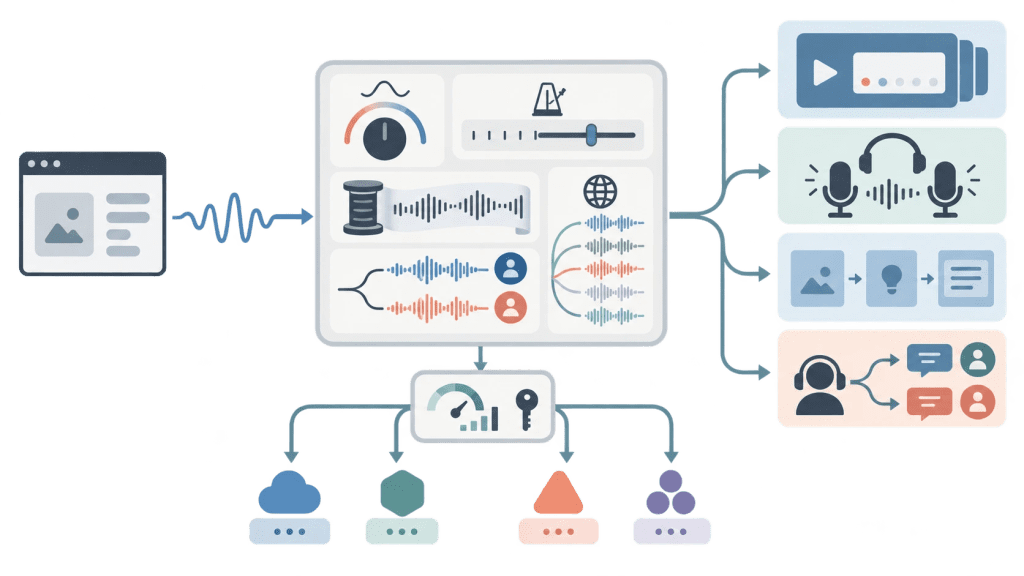
Vercel's independent September 23 integration note confirms the same model IDs in AI Gateway and shows a direct experimental_generateSpeech example using google/gemini-3.8-flash-lite-tts. AI Gateway adds unified usage and cost tracking, routing rules, and bring-your-own-provider-key support, so the models can be tested alongside other speech and generative models without adding a second application integration.
Availability changes the production decision
Teams already using gemini-3.1-flash-tts-preview should compare output quality, voice controls, latency, and pricing before switching. Preview-to-GA moves are not automatically drop-in replacements: voice availability, consent requirements, supported languages, audio formats, quotas, and regional behavior still need to be checked in the current API documentation.
For a new implementation, keep the two tiers separate in configuration. Use Flash-Lite for routine volume and Flash TTS for expressive narration or dialogue. Add fallback handling for quota and provider errors, and store the selected voice and delivery settings with each job so a later model change does not silently alter published audio.
Source check
Google's Gemini API changelog is the primary release record. Vercel's AI Gateway changelog independently confirms production availability, model identifiers, supported speech workflows, and an integration path. The release is a category-level audio-model update; individual voice designs and narrow integrations remain implementation details rather than separate news items.
Try the related loot
Build and inspect Microsoft Foundry agents directly in VS Code