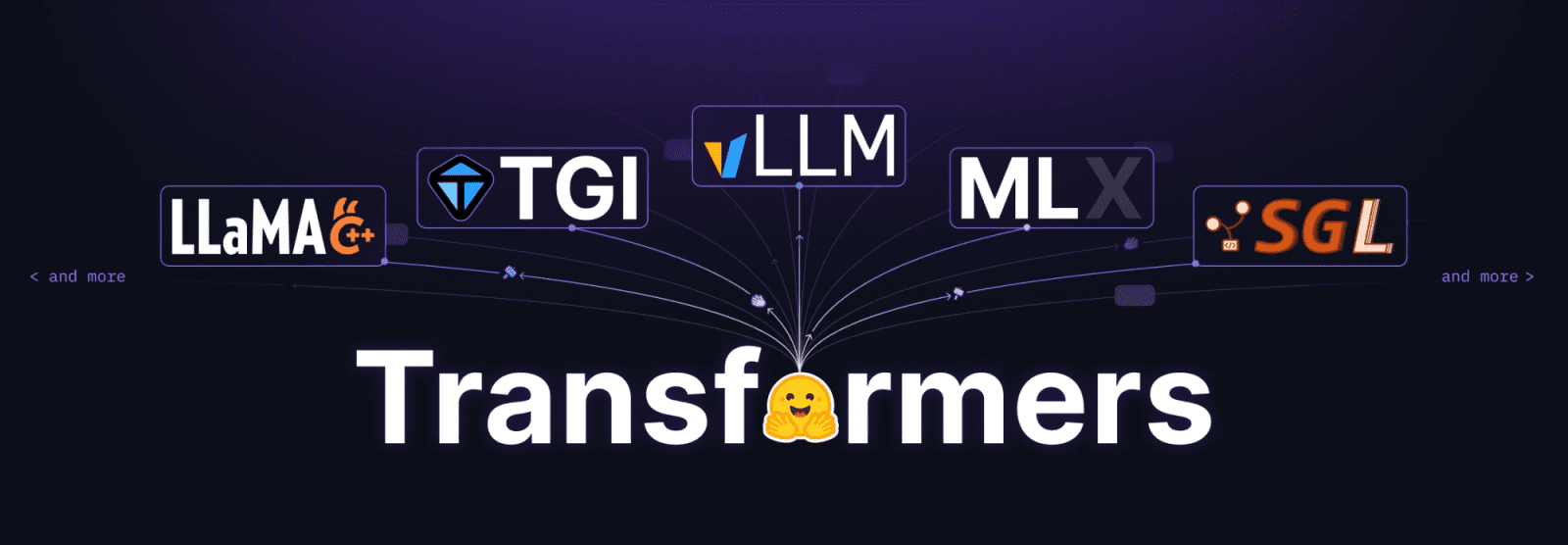
Transformers 5.9.0: what local AI builders should check before upgrading


Hugging Face Transformers 5.9.0 adds new model support and ships fixes that matter for local and self-hosted AI workflows. Here is what to verify before upgrading agent, serving, or multimodal stacks.
Transformers 5.9.0 is a May 20, 2026 Hugging Face release for the widely used open-source model-definition library. The release adds new model support, including Cohere2Moe and HRM-Text, and includes fixes across audio, generation, CI, and serving-adjacent workflows. For teams running local AI tools, agent backends, or OpenAI-compatible wrappers, the useful question is not just “what changed?” but “which integrations should be tested before upgrading?”
Key takeaways
- Transformers 5.9.0 is confirmed by the GitHub release and PyPI package metadata as the current published release.
- The release adds model definitions for Cohere2Moe, Parakeet TDT, and HRM-Text, expanding what can be loaded through the Transformers ecosystem.
- The release notes call out a breaking change for SAM3, EdgeTAM, and SAM3-Lite-Text text embedding inputs, so vision workflows need regression tests.
- Hugging Face’s Serve CLI documentation shows the local server supports OpenAI-compatible endpoints including chat completions, completions, responses, audio transcription, and model listing.
- Upgrade value is highest for teams that already run local inference, model evaluation, or multimodal experiments; casual API-only users can wait unless they need one of the new model definitions.
Practical LinkLoot angle
If your AI workflow depends on local models, treat Transformers as infrastructure rather than a simple Python dependency. A minor-looking library upgrade can change model configs, generation behavior, processor assumptions, or serving compatibility in ways that only appear when an agent hits a real task.
A practical upgrade flow is: pin the current version, run a small benchmark against your most important models, test one representative chat request, one tool/agent request, and one multimodal request, then upgrade only after logs and outputs match expectations. For LinkLoot readers building reusable AI workflows, this is also a good moment to document which backend is responsible for each capability: model definition, serving endpoint, orchestration layer, and UI.
| Component | What changed or matters | Best use | Check before upgrading |
|---|---|---|---|
| Transformers 5.9.0 | New model definitions and reliability fixes | Local inference, evaluation, model loading | Pin version and rerun baseline prompts |
| Cohere2Moe support | Adds a Mixture-of-Experts model definition | Testing Command A+ style MoE workflows | Confirm weights, license, memory, and context requirements |
| Serve CLI | Documents OpenAI-compatible local endpoints | Lightweight self-hosted model server | Verify endpoint behavior with your OpenAI SDK wrapper |
| Vision models | Release notes flag text embedding input changes for SAM3-family models | Segmentation and multimodal workflows | Run image/text embedding tests before production rollout |
Why it matters
Local AI stacks are getting more capable, but also more dependent on compatibility layers. The same workflow may touch Transformers for model definition, Hugging Face Hub for weights, a local server for OpenAI-compatible routing, and an agent framework that assumes stable response formats. When a release adds models and changes inputs for some vision families, the safest path is to upgrade with a narrow test matrix instead of trusting a green install.
For small teams, the decision is simple: upgrade now if the new model support or a listed fix unlocks a workflow you actually use. Otherwise, wait for your framework or deployment template to validate the release, especially if you run agents that call local endpoints without human review.
What to verify before you act
Check the installed version from PyPI or your lockfile first; PyPI reports transformers version 5.9.0, while GitHub provides the detailed release notes. If you use transformers serve, confirm the exact endpoint your client calls, because the Serve CLI docs list separate routes for chat completions, legacy completions, responses, audio transcriptions, and model listing. If you rely on SAM3, EdgeTAM, or SAM3-Lite-Text, do not upgrade blind: the release notes say text embedding input expectations changed, which can break code that passes older pooler-only values.
Also verify licensing and resource needs for newly supported model families before adding them to an automated workflow. A model definition in Transformers does not automatically mean a checkpoint is small enough, licensed for your use, or safe to expose through an agent endpoint.
It is a Hugging Face Transformers release published on May 20, 2026, with new model support and fixes across model loading, generation, audio, and related workflows.
For more workflow ideas around local models, agents, and automation layers, see LinkLoot’s guide to AI workflow automation.
Share your own knowledge as loot
Request access to the guided creator beta and get feedback on your first submission.