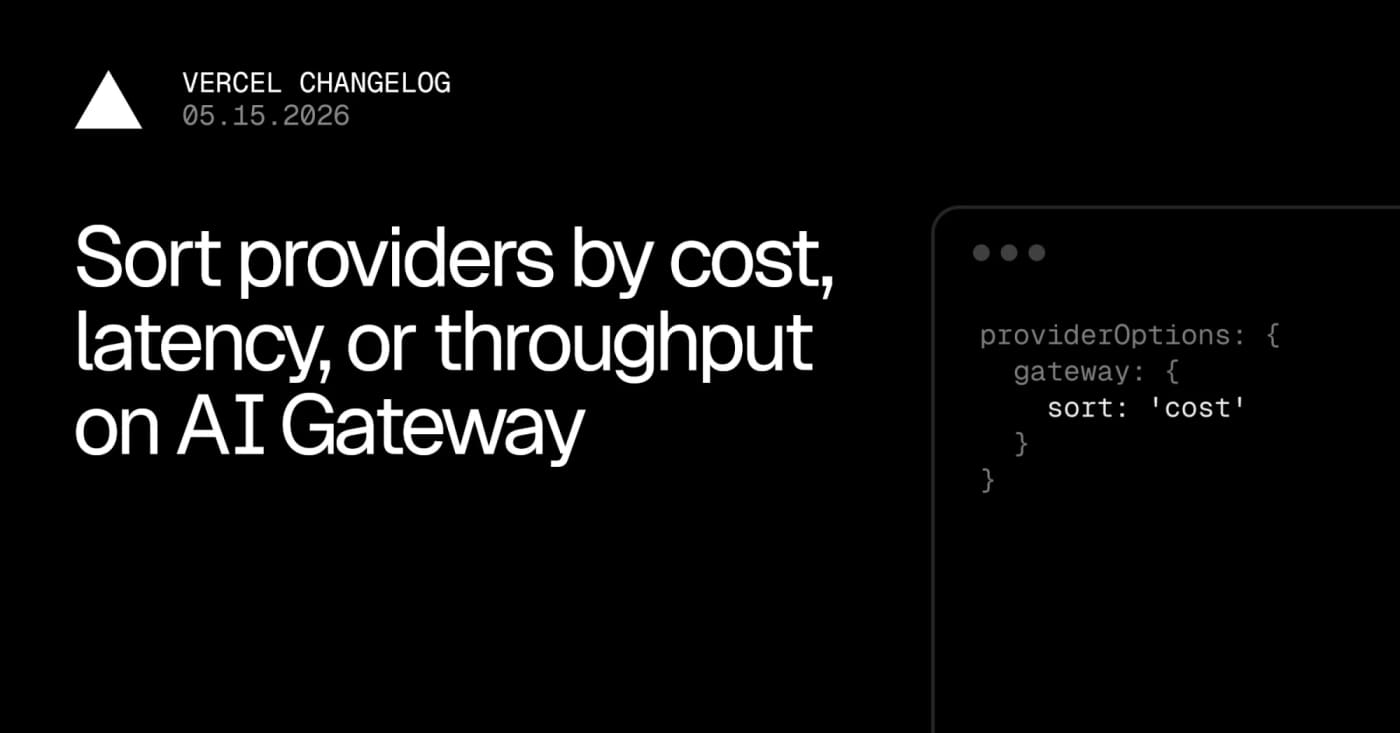
Auriko is a newly launched LLM routing layer for teams that want one API, provider failover, budget controls, and cache-aware cost routing without paying a markup on model calls. Auriko is worth testing if your agent or app traffic already spans several model providers and you keep fighting token-cost drift, cache behavior, or failover rules by hand. It exposes an OpenAI-compatible API, supports routing strategies for cost, latency, throughput, and reliability, and lets teams use their own provider keys, Auriko platform keys, or both. The practical angle is cost control for repeated prompts, agent loops, RAG blocks, and long-running coding workflows. Auriko's technical report says its benchmark covered more than 80,000 API requests across 37 models and found positive cost reduction against all tested comparator targets. Treat that as vendor-run evidence, not a guarantee for your workload. Check What to verify before switching traffic --- --- Workload fit Repeated context, tool schemas, long instructions, and multi-turn sessions should benefit more than one-off calls. Cost claim Re-run your own prompts because provider prices, cache rules, and model availability change quickly. Output stability Routing can change latency and behavior even when the requested model name stays the same. Data policy Confirm zero-data-retention, BYOK, provider selection, and enterprise controls before sending sensitive prompts. Integration Start with the OpenAI-compatible endpoint or SDK before wiring custom routing rules. Use it as a measurement project first: mirror a small slice of traffic, compare total cost, error rate, latency, and output quality, then decide whether cache-aware routing belongs in production.