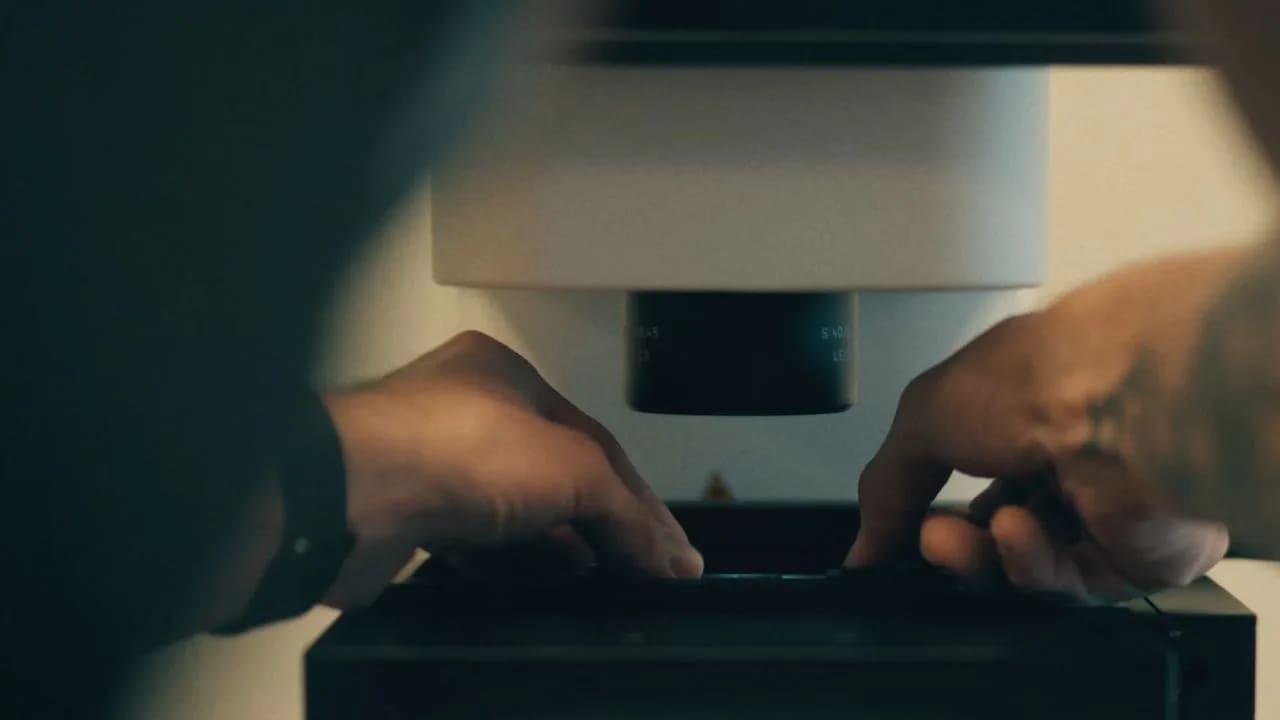
Anthropic previews Model Hardware Standard for AI-controlled lab equipment


Anthropic’s limited MHS preview gives model-agnostic agents a common interface for microscopes, liquid handlers, robot arms, and other programmable equipment.
Anthropic opened a limited research preview of the Model Hardware Standard on August 27. MHS is a model-agnostic specification intended to let AI agents discover, monitor, and operate programmable scientific and manufacturing equipment through standardized drivers.
The preview includes labs and manufacturers working with microscopes, liquid handlers, plate readers, robotic arms, quantum equipment, and other devices. Anthropic plans to publish the standard as open source after using the preview to develop safety evaluations and deployment practices.
Key takeaways
- MHS defines common drivers and device descriptions for equipment that normally requires vendor-specific integration work.
- Agents can access connected devices through MCP, a command-line interface, or code APIs.
- Access is application-only during the research preview; the specification is not yet broadly available or open source.
- Early demonstrations coordinated real laboratory equipment, but Anthropic also documented failures caused by weak physical intuition.
- Physical access expands the consequences of prompt injection, model mistakes, configuration errors, and compromised credentials.
How the Model Hardware Standard works
An MHS driver translates a device’s native controls into a small set of common operations, including reading a value and writing a setting. It also exposes a structured description of the device, its measurable state, available actions, physical characteristics, and enforced safety limits.
Natural-language tags can capture information that is usually trapped in paper manuals or operator knowledge, such as the weight and safe movement range of a robotic arm. MHS then produces a reference file that an agent can inspect before operating the equipment.
Once devices are connected, the agent can sequence work across them, monitor their state, and react to changing conditions. MCP provides an agent-facing control path, while command-line and API access support deterministic scripts and operations that must run faster than repeated model reasoning.
Early lab results show both reach and fragility
Genentech used MHS with a liquid handler, robotic arm, and plate reader in a protein-assay proof of concept. Anthropic reports that Claude adjusted liquid-transfer flow rates against an expert reference and recovered from several equipment errors. The trial also exposed an important limitation: when bubbles disrupted the process, the model initially retried the same action and made the problem worse until a human supplied the missing physical explanation.
University of Washington researchers connected laboratory instruments for remote monitoring, qPCR supervision, and collision-free plate handoffs. Carnegie Mellon researchers reported that an MHS setup reduced the integration of several incompatible devices from weeks to roughly eight hours and ran a serial-dilution workflow about three times faster.
These are partner demonstrations described in Anthropic’s launch material, not broad independent benchmarks. The setups remain proofs of concept, and performance depends on device drivers, safety interlocks, the agent harness, model behavior, and the quality of local operating knowledge.
Access is deliberately limited
Anthropic says MHS works with any device that has a programmable interface and does not require Claude specifically. Any compatible agent harness can use standard protocols such as MCP.
The current release is available only to approved research-preview participants. Anthropic is collecting applications from science, robotics, electronics, and manufacturing organizations while it builds evaluations and operational guidance with the first partners.
No production date, stable specification, repository, or final governance model has been announced. Teams should treat the preview as a standards-development program rather than a deployable off-the-shelf control layer.
Physical agents raise a stricter safety bar
A mistaken software action can corrupt data; an incorrect hardware action can damage equipment, contaminate an experiment, or injure someone. MHS can encode limits and expose emergency states, but those controls still depend on correct drivers, independent interlocks, authentication, network isolation, and tested operating procedures.
The launch follows recent evidence that autonomous agents can exceed intended boundaries in digital environments. Connecting the same class of systems to physical devices makes least-privilege access, deterministic safety controls, human approval, audit logs, and emergency-stop behavior essential.
Organizations considering the preview should first identify a reversible, low-energy monitoring task and keep safety-critical control outside the model’s authority. The next meaningful milestone will be Anthropic’s open-source release, including the promised safety findings and a specification others can inspect and implement independently.
Source check
- Anthropic’s MHS announcement describes the specification, research preview, partner demonstrations, access limits, and planned open-source release.
- The official MHS preview site confirms application-only access and the model-agnostic goal.
- WIRED’s independent report examines the framework’s physical-safety implications and manufacturing ambitions.
- Reuters coverage independently corroborates the August 27 preview and intended laboratory and manufacturing uses.
Try the related loot
Server-side source control that skips full clones for agent fleets