
GitHub Copilot sets September 28 defaults for agents, reviews, and billing


GitHub is consolidating Copilot chat and cloud-agent access, changing the default code-review effort to Balanced, and moving Business and Enterprise seat charges earlier in the billing flow.
GitHub has set three Copilot changes around the same window: a unified chat and cloud-agent experience is planned for September 28, the Default code-review setting will move from Lite to Balanced, and Business and Enterprise seat billing will begin charging assigned seats up front from October 1. Teams have until September 28 to preserve Lite explicitly and review the new access policy.
The dates matter because the change reaches access, review workload, and invoice timing at once. GitHub says Copilot Business and Enterprise prices are not changing, but additional usage can still require payment after included allowances are exhausted.
GitHub is merging Copilot chat and cloud agent
No earlier than September 28, GitHub plans to combine Copilot Chat on github.com, Copilot Chat in GitHub Mobile, and Copilot cloud agent into one experience and policy. The unified experience will be enabled by default after launch, and GitHub says the cloud agent will use Sandbox for a faster cloud workflow.
The policy choice has a concrete consequence. Organizations that opt out will lose Copilot on github.com and GitHub Mobile after the new experience launches. GitHub also says chat data on github.com will move from a 28-day retention period to retention for the life of the account because the surface is moving to agent sessions.
Code review will consume the Balanced default
For repositories and organizations that leave the review effort at Default, GitHub will use Balanced instead of Lite from September 28. Administrators can keep the lighter behavior by selecting Lite explicitly at the organization or repository level before the deadline.
Balanced is intended for deeper analysis of complex and security-sensitive changes, so the operational effect will vary by repository. Review owners should measure comment volume, triage time, and AI-credit usage after the switch. A saved explicit setting is more reliable than assuming that Default retains its current meaning.
Business and Enterprise billing moves earlier
GitHub began re-enabling new Business and Enterprise sign-ups paid by credit card or PayPal on September 1. New seat assignments require payment before users receive Copilot access. For existing customers using those payment methods, GitHub says assigned seats will incur an upfront charge at the start of the next billing cycle from October 1.
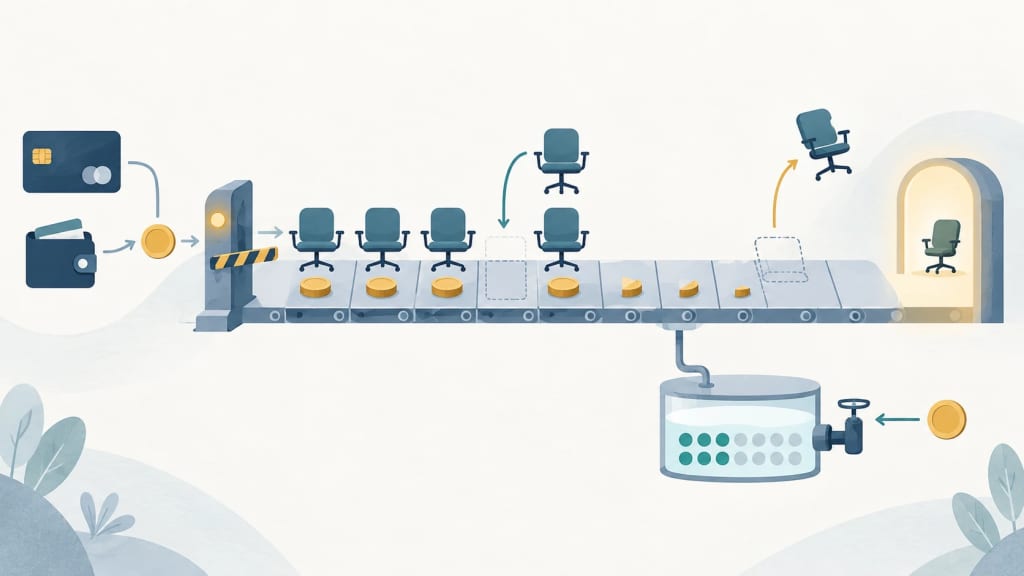
Seats added mid-cycle remain prorated through the end of the billing cycle, while removing a seat does not create a prorated refund. Included usage may also be prorated, and extra usage remains available for purchase through the existing spend controls.
Admin checklist for the September 28 switch
Before the deadline, administrators should:
- record whether the organization will opt into the unified experience;
- set Lite explicitly if Balanced would create unwanted review volume;
- count assigned seats and check the next invoice date;
- verify payment and seat-assignment readiness for new users; and
- confirm how additional AI-credit purchases are governed.
An independent administrator checklist reaches the same practical conclusion: access policy, review effort, and billing should be checked together because each can change the team's workflow or cost exposure. The next milestone is September 28, followed by the October 1 billing behavior for existing Business and Enterprise customers.
Sources and methodology
GitHub's Changelog is the primary source for the dates, policy behavior, billing mechanics, and review default. Tested at Work provides independent operational context for administrators preparing access, review, and invoice checks. GitHub states that prices are unchanged; usage charges, proration, payment method, and opt-out behavior remain the details to verify in each organization.
Try the related loot
Load Versioned WebGPU Kernels Directly from Hugging Face