Health in ChatGPT reaches U.S. users with Apple Health and records access


OpenAI is rolling out Health in ChatGPT to U.S. users 18 and older on web and iOS, with optional Apple Health and medical-record connections.
OpenAI is rolling out Health in ChatGPT to logged-in U.S. users 18 and older on web and iOS. The feature lets users connect Apple Health and supported medical records, then choose when ChatGPT can use that information in ordinary conversations.
The launch turns a limited, separate health experience into a broader ChatGPT surface. OpenAI says early testing showed more than 70% of health-related conversations happened outside the dedicated Health area, so the new version lets connected health context follow the user into relevant chats with permission.
Health data can now follow the conversation
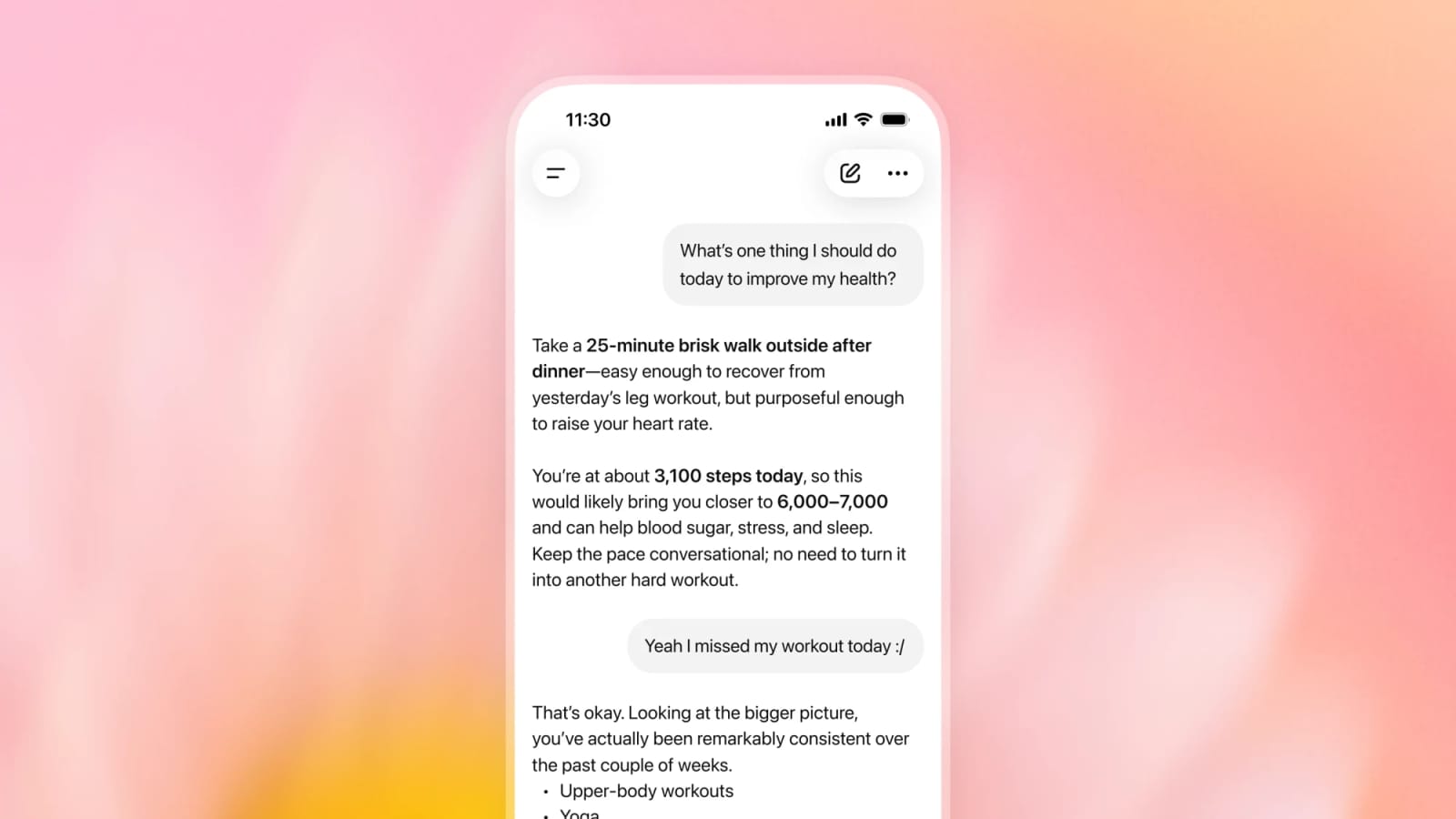
The core change is context. A user can connect medical records, medications, lab results, visit notes, Apple Health activity, sleep, and other supported health-app data, then ask ChatGPT to compare results over time, prepare appointment questions, summarize changes, or account for recent activity while planning a routine.
OpenAI says Health remains the home base for connecting accounts, browsing synced records, viewing trends, and managing permissions. In everyday chat, users can ask ChatGPT to include Health context explicitly, or approve access when the system asks to use connected information.
That makes the feature more useful, but it also raises the standard for checking answers. Health information can be incomplete or stale after a sync. OpenAI tells users to correct outdated details and verify important information against the original source, especially when medication, diagnosis, urgent symptoms, or care decisions are involved.
OpenAI sets access, privacy, and plan boundaries
The rollout starts in the U.S. for logged-in users across Free, Go, Plus, and Pro plans. It is available on web and iOS, and OpenAI says it is not yet available in Codex.
OpenAI says connected medical records, Apple Health information, and conversations that use that data are not used to train foundation models or target ads. The company also says health data receives additional encryption protections, and users can disconnect accounts from Health > Accounts. Synced data from disconnected sources is deleted from OpenAI's systems within 30 days, while information already inside chat history remains until those conversations are deleted.
By default, ChatGPT asks before using connected medical records or Apple Health information to personalize a response. Users can approve once, always allow, or change the setting later. Before a connected plugin action could disclose health information, OpenAI says additional safeguards may require confirmation.
Medical advice remains the hard line
OpenAI frames the product as support for understanding and organizing health information, not a replacement for clinicians. The company says GPT-5.5 Instant brought stronger health performance to free users, while GPT-5.6 Sol is its strongest health model for paid users, but it also says ChatGPT can still make mistakes.
The Verge's coverage highlights the tension: OpenAI is making ambitious claims about health reasoning while telling users to verify important information and discuss medical decisions with qualified professionals. That caveat belongs near the center of the story, not in the fine print.
For readers, the useful test is practical. Health in ChatGPT may help turn scattered records into better questions, summaries, and prep notes. It should not be treated as a diagnosis engine, emergency triage system, or substitute for medical judgment.
What users should check before connecting records
Before connecting a health account, confirm which records or app metrics will sync, whether the data is current, how permission prompts are configured, and whether any shared device or family account could expose sensitive details. If the feature suggests a medical interpretation, compare it with the original record and bring the question to a clinician.
The next milestone is not just adoption. It is whether OpenAI can keep privacy controls understandable and clinical caveats visible as health context becomes part of normal ChatGPT conversations.
Sources and methodology
This post uses OpenAI's July 23 rollout announcement as the primary source, with The Verge and Medical Economics as independent coverage. Legal and medical caution is preserved because the product handles sensitive health data and OpenAI's own announcement says ChatGPT does not replace qualified medical care.
Try the related loot
UI-TARS Desktop is a serious local computer-use agent — if you lock down the setup