
Linux Copy Fail root vulnerability: why CVE-2026-31431 is a real infrastructure risk


Copy Fail is not just another Linux local privilege-escalation bug. Its broad distro reach, tiny Python exploit, and shared-kernel implications make it especially relevant for containers, CI runners, and multi-tenant infrastructure.
The newly disclosed Copy Fail Linux vulnerability is exactly the kind of security story infrastructure teams should pay close attention to. Not because it is remote by default, but because it turns a seemingly small local bug into something operationally dangerous across shared Linux systems, CI environments, and containerized infrastructure.
At the center of the story is CVE-2026-31431, a Linux kernel privilege-escalation flaw that researchers say can be exploited with a 732-byte Python script to gain root privileges across major distributions. That headline alone is enough to attract attention. But the real significance is broader: the bug reportedly affects kernels shipped across mainstream Linux distributions since 2017 and can also be relevant for container escape scenarios because of the shared host page cache.
What Copy Fail actually is
According to the public reporting and the dedicated disclosure material, Copy Fail is a logic flaw in the Linux kernel that can be abused by a local unprivileged user to gain a controlled write primitive against the page cache of readable filesystems. The disclosed exploit path reportedly chains through AF_ALG, splice(), and kernel crypto behavior to create a controlled write into cached file content without persisting the modification to disk in the usual way.
That detail matters. The file on disk may remain unchanged, which means simple integrity checks or checksum comparisons may miss the tampering, while the system still consumes the manipulated content from page cache during access.
For SEO readers asking What is Copy Fail?, the short answer is:
- a Linux kernel local privilege-escalation vulnerability
- tracked as CVE-2026-31431
- reportedly high severity (CVSS 7.8)
- exploitable with a very small Python proof of concept
- relevant across major Linux distributions from a long exposure window
Why the 732-byte exploit is such a big deal
Small exploit size is not automatically the important part. But here it signals something deeper: this is being framed as a straight-line exploit, not one that depends on fragile races, distro-specific memory tricks, or highly unstable kernel offsets.
In other words, the researchers are arguing that the exploit path is reliable and portable, which is exactly what makes defenders nervous.

When a privilege-escalation bug is both deterministic and broad in distribution coverage, it becomes especially relevant in environments like:
- multi-user Linux hosts
- CI runners and build systems
- shared shell environments
- SaaS backends that execute user-controlled code
- container clusters with shared-kernel assumptions
That is why this story is likely to rank high for search intent around Linux root exploit, Copy Fail vulnerability, and CVE-2026-31431 exploit.
Why container and Kubernetes teams should care
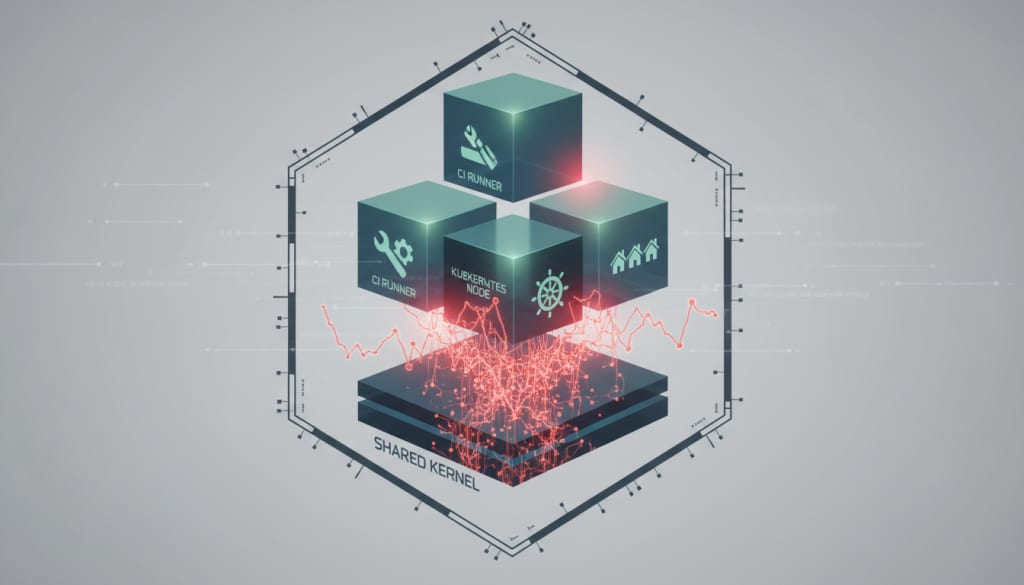
One of the more serious claims around Copy Fail is that it can function as a container escape primitive because the page cache is shared on the host. That changes the conversation from “local root only” to “local root on the node may become cross-boundary risk.”
For teams running Kubernetes, self-hosted CI, or multi-tenant compute, this is a much bigger problem than a single-user workstation issue.
Which systems appear most exposed
Based on the public disclosure, the issue was reportedly verified across multiple mainstream distributions and kernel variants, including Ubuntu, Amazon Linux, RHEL, and SUSE combinations. The broader claim is that essentially every mainstream distro shipping affected kernels in the 2017-to-patch window is in scope.
A useful way to think about exposure is by operational profile:
| Environment | Risk level | Why it matters |
|---|---|---|
| Multi-tenant Linux hosts | High | Any user may be able to escalate to root |
| Kubernetes and container nodes | High | Shared host page cache can turn local code execution into node-level risk |
| Self-hosted CI runners | High | Untrusted PR or build code may escalate on shared infrastructure |
| Cloud services running user code | High | Tenant-controlled scripts or containers can raise the stakes |
| Single-tenant servers | Medium | Mostly relevant as a post-compromise privilege escalation step |
| Single-user laptops | Lower | Still dangerous, but less operationally explosive than shared systems |
What makes this bug operationally dangerous
A lot of security write-ups stop at “local privilege escalation.” That is not enough here. The more useful operational question is: what can an attacker do once they get a foothold as an ordinary user or inside a constrained workload?
With Copy Fail, the answer may include:
- converting limited code execution into full root access
- compromising self-hosted CI workers
- breaking out of container assumptions on shared nodes
- moving from one tenant context into host-level control
- bypassing naive integrity checks because the manipulated content lives in cache
Temporary mitigation vs. patching
The right answer is still simple: patch first. The public guidance points to patched kernels incorporating the relevant mainline fix and suggests that major distributions should be shipping updates.
Before patching is possible, one mitigation path that has been highlighted is disabling the algif_aead module or blocking AF_ALG socket creation in high-risk environments.
If patched kernel packages are available for your distribution, that is the cleanest fix. This is the preferred path for production systems.
If patch rollout is delayed, disabling the relevant AF_ALG path may reduce risk in the short term, especially on systems that run untrusted workloads.
This mitigation is especially relevant for high-exposure setups such as:
- Kubernetes worker nodes
- self-hosted GitHub Actions or GitLab runners
- sandboxed code-execution platforms
- multi-user jump hosts
What defenders should do right now
If you are responsible for Linux fleets, the response should be practical rather than theoretical.
The bigger lesson behind Copy Fail
There is also a broader pattern here. Linux security discussions often separate “local privilege escalation” from “serious infrastructure risk,” but modern environments blur that line.
In a world of:
- container orchestration
- developer platforms
- hosted notebooks
- self-hosted automation
- agent sandboxes
- shared CI workers
…a local kernel exploit is no longer just a local exploit. It can become an infrastructure exploit, a tenant-isolation problem, and a trust-boundary failure all at once.
Because the blast radius grows fast when the same kernel is shared across users, containers, build jobs, or tenant workloads.
Final verdict
Copy Fail deserves attention not because the exploit script is tiny, but because the combination of broad distro scope, deterministic local root, and shared-kernel implications makes it a highly practical infrastructure problem.
For searchers asking Is Linux vulnerable to Copy Fail?, What is CVE-2026-31431?, or How dangerous is the new Linux root exploit?, the answer is straightforward: if you run mainstream Linux in shared or container-heavy environments, this is a patch-now issue.
Copy Fail is the name given to CVE-2026-31431, a Linux kernel local privilege-escalation vulnerability affecting major distributions.
Key takeaways
- Linux Copy Fail root vulnerability: why CVE-2026-31431 is a real infrastructure risk is worth tracking, but it should not be treated as an automatic recommendation.
- The important part is not the incident headline. It is what the failure mode says about systems people rely on quietly every day.
- The strongest next step is to compare the practical trade-offs instead of reacting to the headline.
Practical LinkLoot angle
For a deeper comparison path, use the related LinkLoot guide on free AI tools. It gives this post a second layer: not just what happened, but how to decide whether it belongs in your tool stack, content workflow, or buying shortlist.
| Decision point | What to look for | Why it matters |
|---|---|---|
| Fit | Does it solve a recurring problem? | One-off curiosity rarely deserves workflow space. |
| Limits | Are caps, pricing, access, or platform rules clear? | Hidden limits change the real value quickly. |
| Switching cost | Can you test it without rebuilding your setup? | Small tests beat full migrations. |
What to verify before you act
Before changing your own setup, check the original advisory, affected versions, mitigation notes, and whether your environment is actually exposed.
Linux Copy Fail root vulnerability: why CVE-2026-31431 is a real infrastructure risk is worth watching, but the decision depends on fit, current availability, limits, and cost.
Try the related loot
UI-TARS Desktop is a serious local computer-use agent — if you lock down the setup