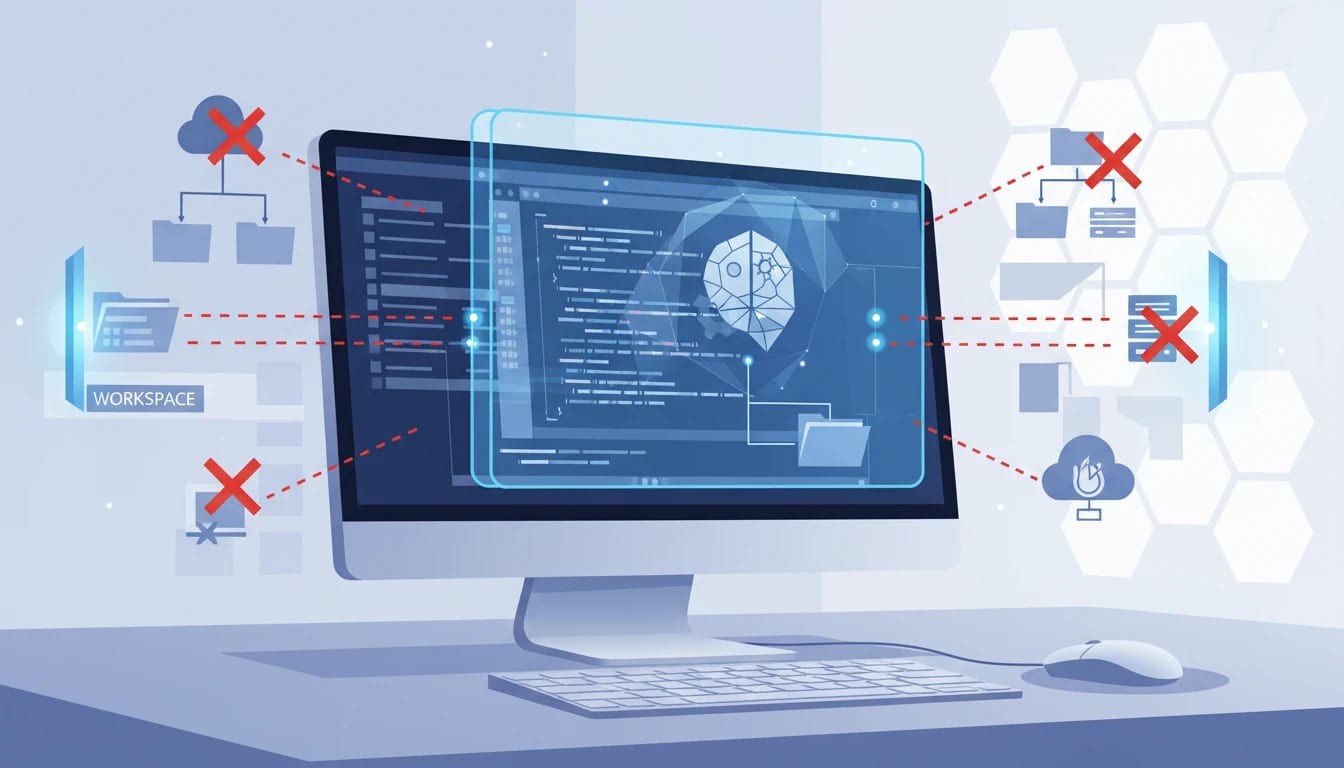
OpenAI shows how Codex on Windows now gets a real sandbox instead of all-or-nothing trust


OpenAI says Codex on Windows now has a custom sandbox approach that limits risky local actions more cleanly than the old choice between constant approvals and broad full-access mode.
OpenAI says Codex on Windows now uses a custom sandbox design so the product no longer has to live between two bad extremes: approving almost every command or granting full local access. The company’s engineering write-up says the goal is to keep the agent useful while still constraining writes and network access inside safer bounds. For teams evaluating local coding agents, the real news is not just “Windows support exists,” but that OpenAI is finally describing how it handles isolation on the platform where OS-level sandboxing was a weaker fit.
Key takeaways
- OpenAI says Codex on Windows previously forced users into either heavy approval friction or broad full-access mode.
- The company rejected several built-in Windows options, including AppContainer, Windows Sandbox, and integrity-label-based approaches, because they did not fit open-ended developer workflows cleanly enough.
- The write-up frames the new approach as a way to preserve a normal developer environment while still enforcing safer boundaries for agent actions.
- The most useful detail for buyers is that OpenAI is treating sandboxing as a product requirement for local coding agents, not a nice-to-have security layer.
- Public corroboration is still thin, so the technical specifics in this story primarily come from OpenAI’s own engineering post.
Why it matters
If you are comparing coding-agent setups across macOS, Linux, and Windows, this changes one practical question: whether Windows can host a local agent workflow without making every session either annoying or reckless. OpenAI’s post argues that the old tradeoff was exactly that: too many approval prompts for normal use, or too much trust when switching to full access.
That matters beyond Codex itself. Any team standardizing local AI development tools eventually has to decide whether the agent runs on a real developer machine, inside a VM, or behind a stricter remote environment. A more workable Windows sandbox does not end that debate, but it narrows one obvious gap.
| Decision point | What OpenAI’s new explanation improves | What still needs scrutiny |
|---|---|---|
| Windows viability for local agents | Shows that OpenAI sees Windows isolation as solvable, not a permanent exception case | Buyers still need proof from real-world usage and failure cases |
| Developer experience | Reduces the appeal of choosing between endless approvals and unrestricted full access | The exact friction level still depends on how the sandbox behaves in daily workflows |
| Security posture | Signals that write and network boundaries matter for agent tooling | OpenAI’s post is still vendor-authored, so independent technical validation remains limited |
For readers mapping safer local AI stacks, LinkLoot’s /guides/ai-agent-tools is the right internal follow-up.
What to verify before you act
Start by testing what the sandbox actually blocks on a Windows machine you control. The key question is not whether the article sounds careful, but whether the resulting workflow reliably constrains writes, network calls, and child processes without breaking common developer tasks.
Then check how this compares with your alternative setup. If your team already prefers remote sandboxes, disposable VMs, or Linux-first agent hosts, OpenAI’s new Windows story may reduce friction but still not be your best operational choice. Finally, remember that current public corroboration is light: Hacker News confirms the post is circulating, but the substantive implementation details still come from OpenAI’s own engineering account.
OpenAI says it built a custom sandbox path so users are not stuck between near-constant approvals and broad unrestricted access.
The useful takeaway is simple: local coding agents only become trustworthy when the sandbox model is concrete enough to inspect, not just promised in marketing copy. OpenAI has now given Windows users a more concrete story, which makes this worth tracking even before wider third-party testing catches up.
Try the related loot
Audit OpenClaw Skills for Supply-Chain Risks Before Installing Them