OpenAI launches ChatGPT Images 2.5 with two API-ready variants


OpenAI has announced ChatGPT Images 2.5 for more polished image creation and editing. Vercel independently lists two OpenAI variants for AI Gateway, giving developers concrete model IDs for faster iteration or tighter composition control.
OpenAI has announced ChatGPT Images 2.5, a new image-generation and editing release aimed at turning ideas, sketches, and reference photos into more polished, personalized results. The announcement is dated September 8, 2026. A separate Vercel changelog entry confirms that developers can already reach two OpenAI variants through AI Gateway, making this more than a consumer-only product note.
What ChatGPT Images 2.5 changes
OpenAI describes the release around better fidelity to the user’s intent: ideas, sketches, and reference photos should translate into images that more closely reflect the requested result. That matters most for iterative work, where preserving a visual direction across several edits is more useful than producing a single attractive first draft.
The announcement does not establish universal access, plan entitlements, API pricing, or a single rollout schedule for every ChatGPT user. Those details should be checked in the account or product surface where the feature appears. The release should therefore be read as a product launch, not as a promise that every account has the same controls today.
Flare and Sunburst give developers two routes
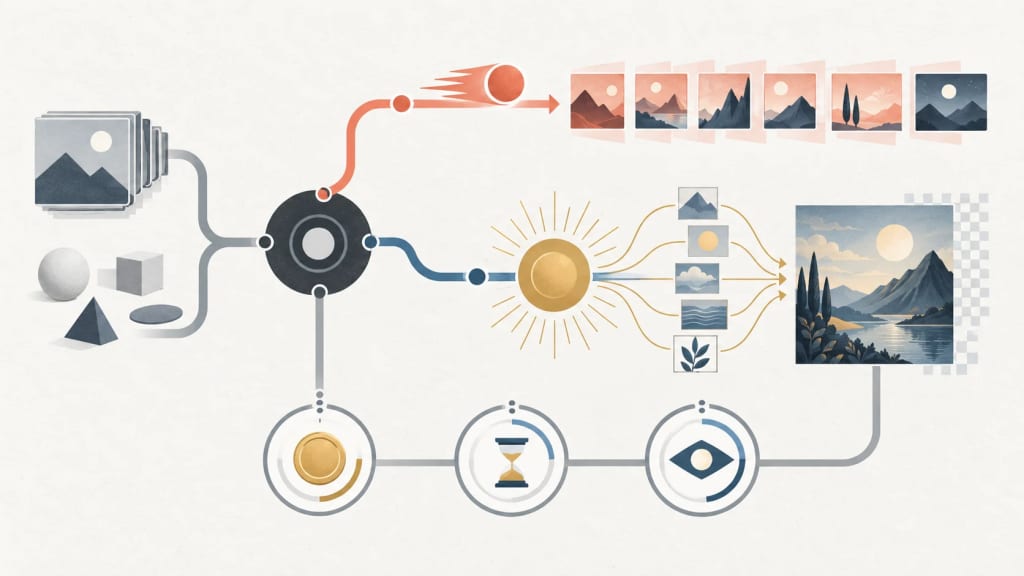
Vercel lists openai/gpt-image-2.5-flare and openai/gpt-image-2.5-sunburst on AI Gateway. Its description says both models generate and edit images, accept reference images, follow complex visual instructions, and handle detailed layouts and transparent backgrounds.
The split is practical. Flare is positioned for faster generation and iteration. Sunburst takes longer but offers tighter control for detailed composition. Vercel also exposes spend tracking and request traces through its gateway, which gives teams a way to compare quality, latency, and cost inside an existing integration layer.
What teams should verify before switching
The model names are concrete, but they do not answer every production question. Before replacing an existing image workflow, verify:
- whether the required model ID is enabled for the intended account and region;
- input-image limits, output dimensions, transparent-background behavior, and supported edit flows;
- current per-image pricing, latency, rate limits, and any gateway markup;
- how reference images and generated outputs are handled under the applicable data-retention policy.
For a first comparison, use the same reference image and prompt with Flare and Sunburst. Measure edit fidelity and turnaround time separately; a slower model may be the better choice for final composition, while a faster one may suit thumbnail exploration or batch ideation.
The availability signal
The two sources describe different surfaces: OpenAI announces the ChatGPT Images 2.5 product, while Vercel documents specific model IDs in a developer gateway. Together they establish a fresh release and an independently observed integration path without implying that ChatGPT access, direct OpenAI API access, and Vercel AI Gateway access are identical.
For practical image-workflow patterns, LinkLoot’s AI workflow automation guide is the relevant next step. The immediate milestone is broader documentation around direct API access, pricing, and plan-level availability.
Sources and methodology
This article uses OpenAI’s September 8 announcement as the primary source and Vercel’s separate AI Gateway changelog as independent corroboration. No claim of hands-on testing is made, and availability details may vary by product surface.
Try the related loot
Deterministic memory for AI agents that tracks current facts and reports freshness