Use Vercel Service Bindings before exposing private backends


Vercel Service Bindings let one service call another through internal URLs, routing, TLS, and reachability grants without creating a public backend route.
Vercel Service Bindings are confirmed available for service-to-service communication inside Vercel deployments. They let one service call another through an injected internal URL, while Vercel handles routing, TLS, and the reachability grant without making the target service public.
What changed
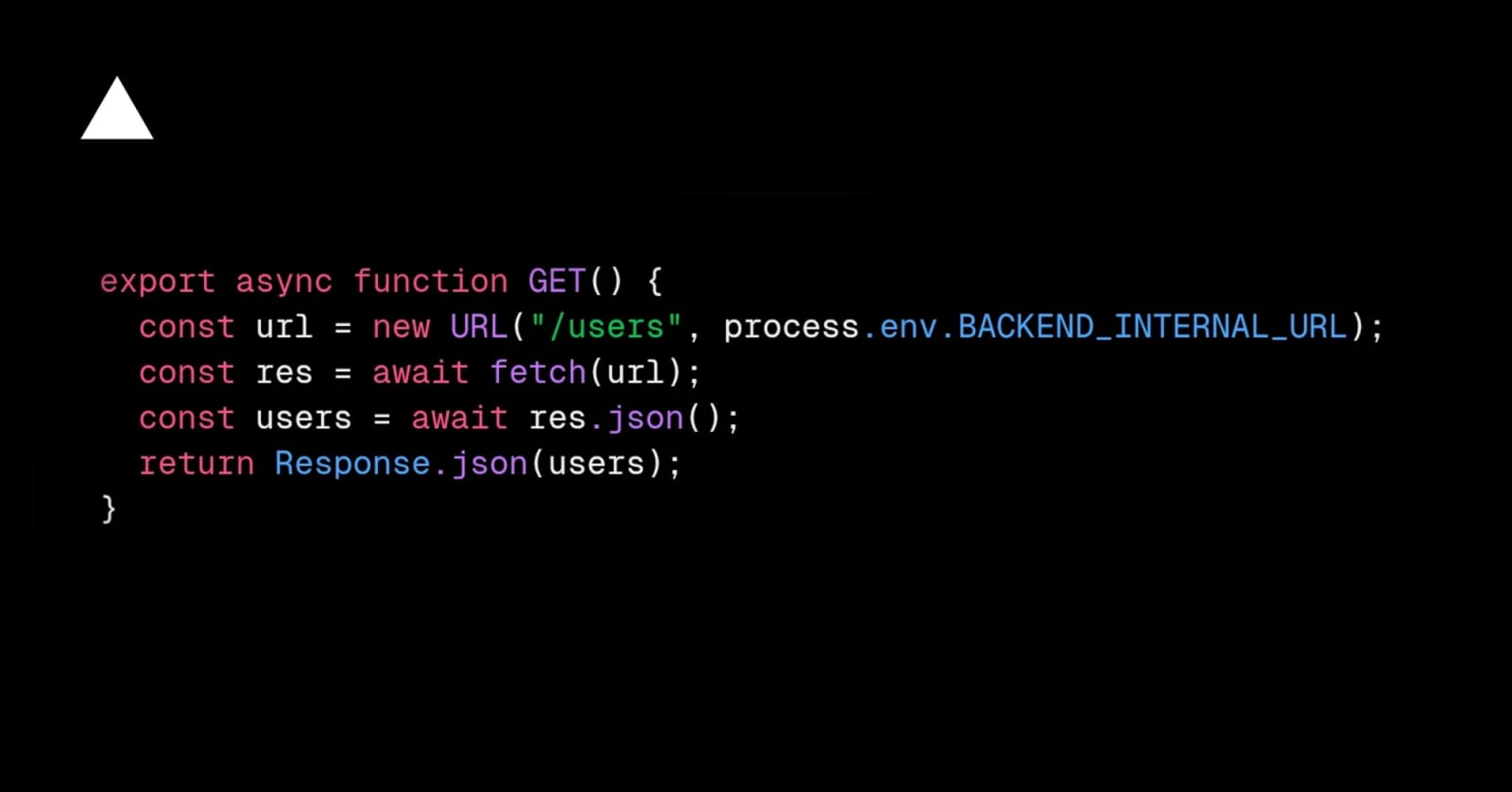
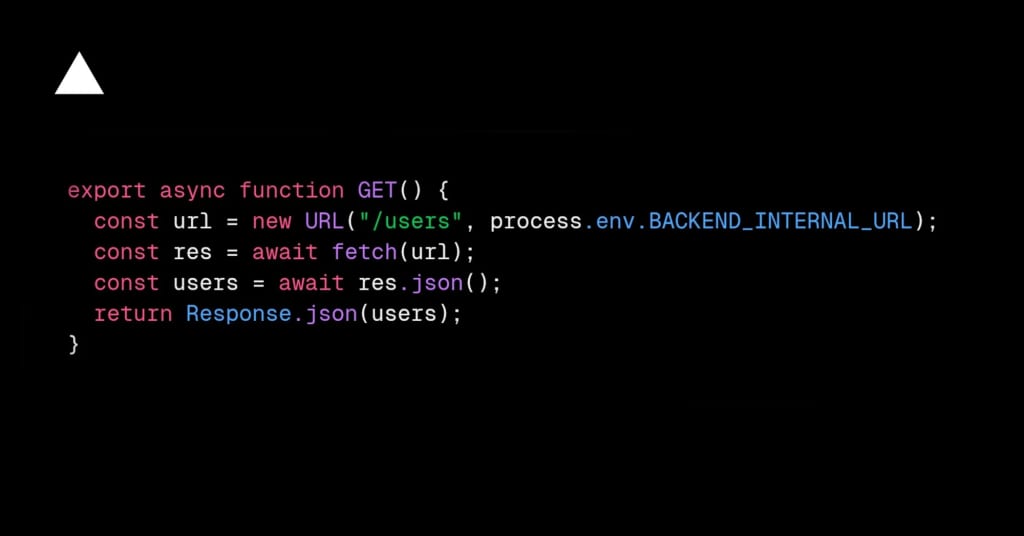
Vercel added Service Bindings for multi-service applications. A frontend service can declare a binding to a backend service, receive a generated URL in an environment variable, and call it with normal server-side fetch code.
The key change is reachability. Vercel's docs say a binding grants internal access only to the caller service that declares it. It does not create a public route, and a public rewrite to one service does not automatically let another service call it.
| Option | Best fit | Access model | Caveat |
|---|---|---|---|
| Public rewrite | Public API endpoints | Internet-facing route | Needs full public hardening. |
| Service Binding | Private service-to-service calls | Caller-declared internal grant | Still needs app-level authorization. |
| Hardcoded hostname | Legacy internal calls | Manual URL management | Risky across previews and environments. |
| Separate project | Stronger isolation | Project boundary | More routing and deployment overhead. |
Why this is early
The primary signal is Vercel's July 1 changelog. The documentation independently explains the binding model, the caller-declared configuration, the generated environment variable, and the limits around public ingress, middleware, builds, and billing.
This is a confirmed platform feature, not a rumor. The part to test before migration is how it behaves in your own deployment topology, especially if you use middleware, deployment protection, custom auth, or preview deployments with multiple services.
Key takeaways
- Service Bindings let server-side code in one Vercel service call another service directly.
- The target service does not need a public route just to be reachable by an internal caller.
- The generated URL is deployment-aware, so preview services can call the matching preview target.
- Internal calls skip the public request pipeline, including firewall, deployment protection, top-level middleware, and CDN request accounting.
- Vercel bills binding calls as Service Requests and Fast Origin Transfer, not CDN Requests or Fast Data Transfer.
Availability and access
Service Bindings apply to Vercel Services, where one project can contain independently built units such as a Next.js frontend and a FastAPI, Go, or other backend service. Bindings are declared by the caller service and injected at runtime as environment variables.
The docs include important boundaries. Bindings are runtime-only for service functions, do not resolve during builds, and cannot be used from middleware. They grant internal reachability, but they do not replace application-level authentication or authorization between services.
Practical LinkLoot angle
This is most useful when a team moved backend code into the same Vercel project but still exposes internal APIs through public rewrites because the frontend needs to call them. Service Bindings give that frontend a private path to the backend while keeping the public route table smaller.
Before moving traffic, map each backend endpoint into one of three buckets: public by design, internal only, or internal with separate auth. That simple inventory usually reveals which routes should become private bindings first. For more automation patterns around agent-built apps, see LinkLoot's AI workflow automation guide.
What to verify before you act
- Confirm both caller and target are modeled as Vercel Services in the same deployment structure.
- Check whether your call path depends on middleware, firewall, or deployment protection, because binding calls skip the public request pipeline.
- Add application-level authorization for sensitive service-to-service operations.
- Review pricing impact under Service Requests and Fast Origin Transfer.
- Test preview deployments so callers resolve the matching preview target instead of a production backend.
Source check
Confirmed by:
- Vercel Changelog: Service Bindings provide internal service URLs, routing, authentication, and TLS for service-to-service calls.
- Vercel Docs: bindings are caller-declared reachability grants, injected as deployment-aware URL environment variables.
Context:
- LinkLoot previously covered Vercel Services as a broader project model. This update is narrower: it focuses on private communication between those services.
They are caller-declared bindings that let one Vercel service call another through an injected internal URL.
Try the related loot
UI-TARS Desktop is a serious local computer-use agent — if you lock down the setup