Agent Plugins 1.0 reaches Copilot as vendors standardize agent extensions


Agent Plugins 1.0 is now generally available in GitHub Copilot surfaces after Vercel, AWS, Anysphere, GitHub, Microsoft, OpenAI, and Google aligned around a portable package format for agent skills and MCP servers.
GitHub says Agent Plugins 1.0 is now generally available across VS Code, Copilot CLI, the GitHub Copilot SDK, and the GitHub Copilot app. The bigger change is not another Copilot feature toggle: a multi-vendor group is trying to make agent extensions portable across major coding-agent clients instead of forcing teams to repackage the same skill or MCP server for every tool.
Vercel’s launch post says Agent Plugins 1.0.0 was refined with Amazon Web Services, Anysphere, GitHub, Microsoft, OpenAI, and Vercel, with Google joining as a core maintainer on launch day. For developers building internal agent workflows, the practical question is now less whether plugins are possible and more how to govern the packages before they carry instructions and tool access between clients.
Key takeaways
- Agent Plugins 1.0 packages agent skills and MCP server configuration into one portable plugin directory.
- GitHub now lists support across VS Code, Copilot CLI, the Copilot SDK, and the GitHub Copilot app on all Copilot plans.
- Vercel says launch support includes ChatGPT and Codex, Cursor, GitHub Copilot, Kiro, and VS Code.
- Enterprise controls still matter because the spec standardizes packaging, not trust, review, sandboxing, or installation policy.
What Agent Plugins 1.0 changes
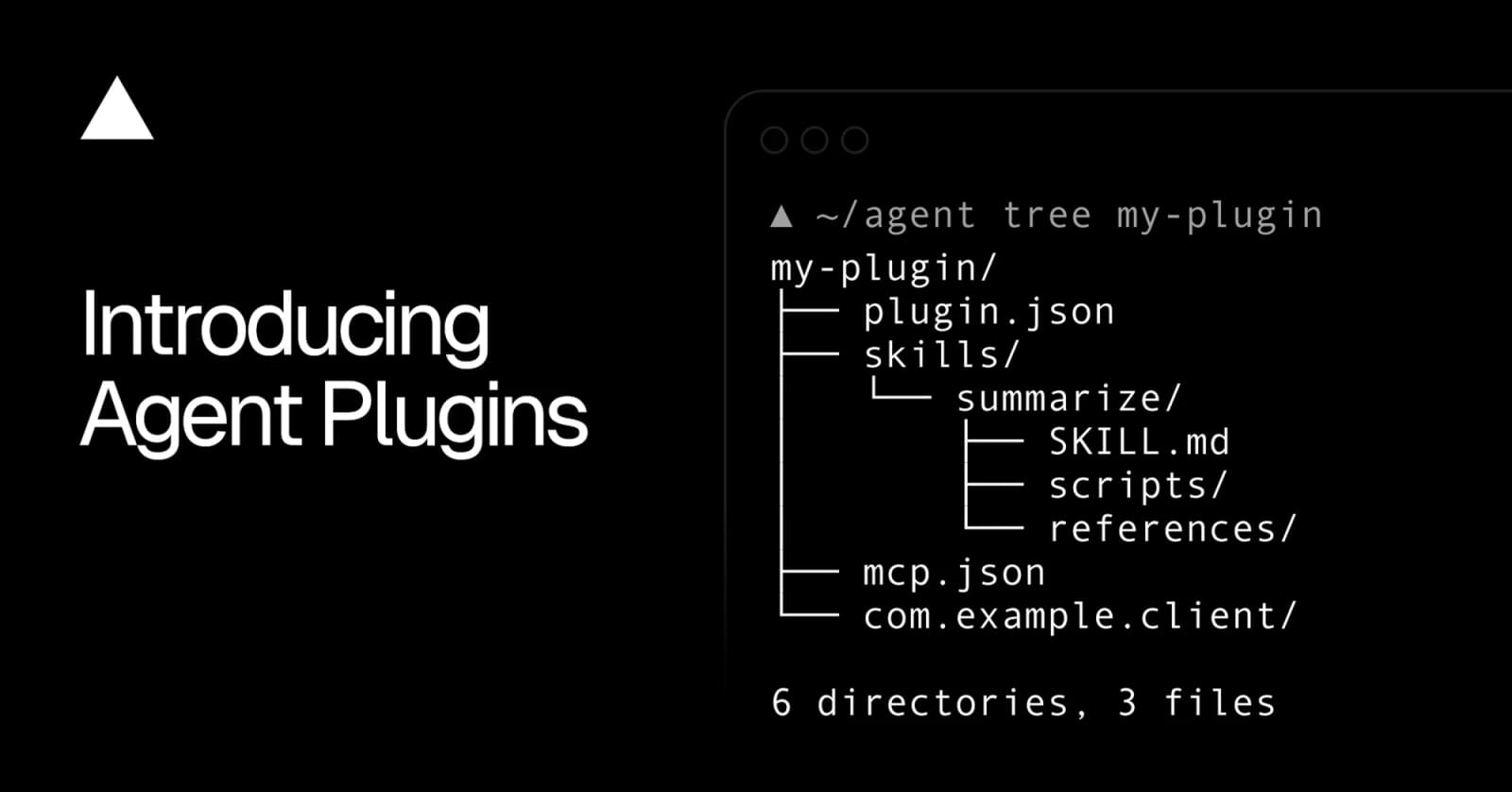
Agent Plugins defines a small directory contract around a plugin.json manifest, optional skills/ content, and optional mcp.json server configuration. Vercel’s announcement frames the spec as a packaging layer, not a new runtime or replacement for Agent Skills or the Model Context Protocol.
That matters because the pain point is real. Many agent extensions combine reusable instructions with tool integrations, but each client has historically expected a different manifest, folder structure, discovery path, or configuration layer. Agent Plugins gives the portable parts a predictable home and leaves client-specific behavior in namespaced extension directories.
GitHub turns the spec into a developer workflow
GitHub’s August 12 changelog moves the standard from ecosystem announcement into daily Copilot workflow. GitHub says developers can build a plugin once and use it across compatible agent clients, install spec plugins from the Awesome Copilot marketplace, and keep existing Copilot plugins that do not yet target Agent Plugins 1.0.
For maintainers, GitHub describes migration as mostly manifest and layout work: add the schema to plugin.json, keep skills under skills/, put MCP configuration in mcp.json, and move Copilot-specific behavior into a com.github.copilot/ namespace that other clients can ignore.
Why the vendor list is the story
The launch is notable because the named participants span several competing agent surfaces. Vercel says the initial technical steering committee includes maintainers from AWS, Cursor, Microsoft, OpenAI, and Vercel. AWS separately describes Agent Plugins as part of a broader open-protocol push meant to reduce lock-in across agent tooling.
That does not make the format universal overnight. It does make plugin packaging a credible shared layer for teams already using more than one coding assistant or agent client. A skill that documents a deployment runbook, a compliance process, or an internal workflow can now have one portable package around its shared components.
Governance is still the hard part
GitHub’s rollout notes emphasize that Business and Enterprise customers can use existing managed settings to install, block, and restrict plugin marketplaces across supported Copilot clients. That is the right place to focus first. Portable plugins also make unsafe plugins more portable.
The standard deliberately keeps installation, distribution, policy, user experience, and client-specific capabilities outside the portable core. That keeps version 1 small, but it also means organizations still need their own review process for prompt-injection risk, server commands, credential exposure, dependency trust, and marketplace policy.
Source check
- Vercel’s Agent Plugins announcement confirms the 1.0.0 public release, the vendor collaboration, the package layout, and the launch client list.
- GitHub’s Copilot changelog confirms general availability in VS Code, Copilot CLI, the Copilot SDK, and the GitHub Copilot app.
- AWS Open Source Blog corroborates the standard’s purpose and the packaging scope from another participating vendor.
- VS Code documentation gives implementation context for how compatible clients discover plugin components.
Try the related loot
Build and inspect Microsoft Foundry agents directly in VS Code