Speed up an open vision model on edge hardware with LFM2.5-VL-DSpark
Liquid AI's experimental LFM2.5-VL-DSpark drafter accelerates LFM2.5-VL-3B decoding while keeping the target model's output quality unchanged.
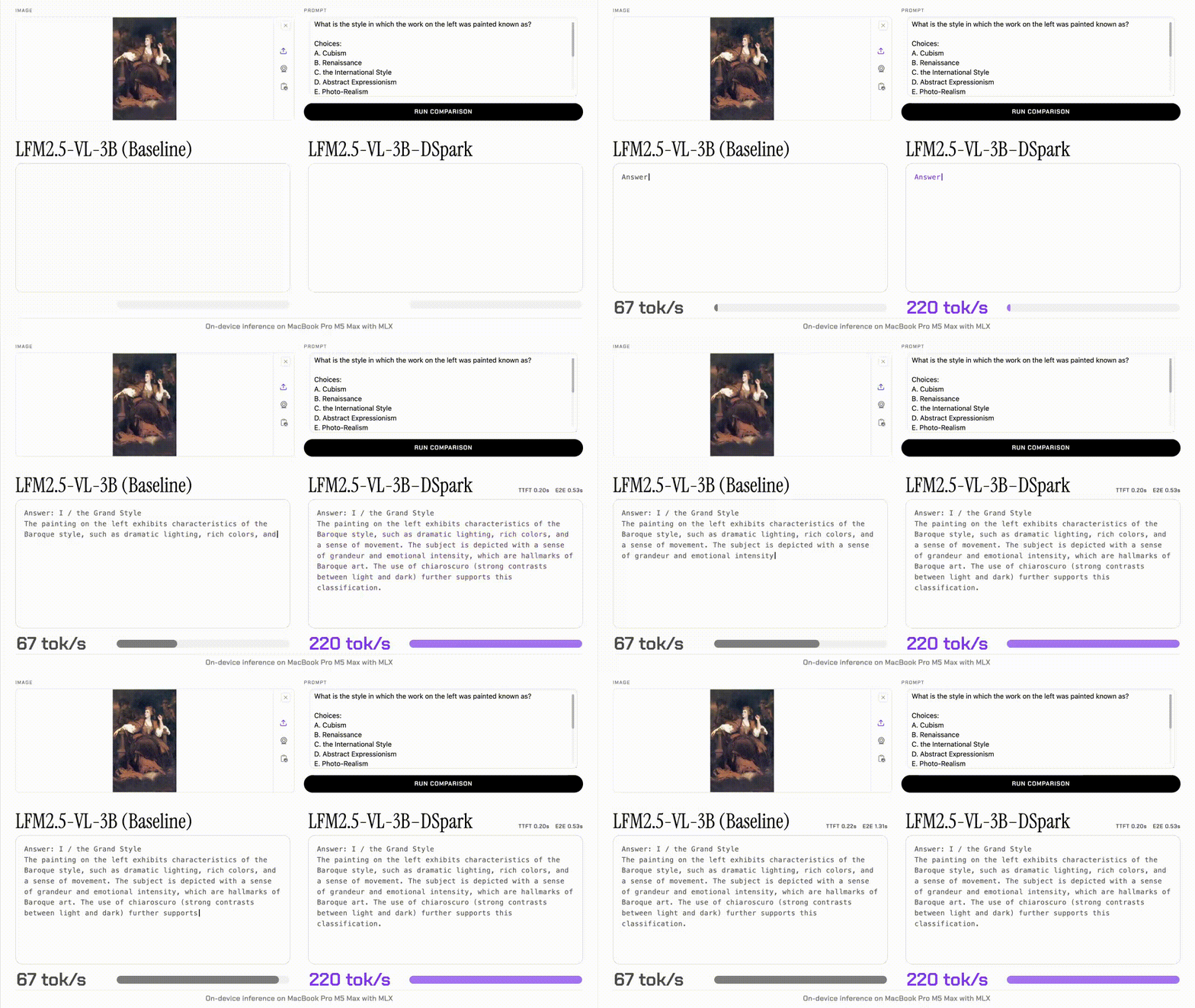

What you get from it
Liquid AI's LFM2.5-VL-DSpark is an open-weight speculative-decoding drafter for the LFM2.5-VL-3B vision-language model. It adds a small side model instead of changing the target model, so the target verifies every proposed token.
What it provides
- Up to 3.13× faster decoding on an edge device and up to 2.66× on an H100 in Liquid AI's reported tests.
- End-to-end gains up to 2.62× on the tested M5 Max setup and 2.27× on the tested H100 setup.
- A roughly 280M-parameter drafter, adding about 8.9% to the deployed parameter count.
- Day-one support for llama.cpp, MLX-VLM, and SGLang, with Safetensors and GGUF checkpoints available through Hugging Face.
Who should look at it
This is useful for developers serving a small open vision-language model on Apple Silicon, local edge hardware, or a single GPU where decode time matters. The reported measurements use FP16 or BF16 and batch size 1; Liquid AI says quantized-model acceleration is outside this release's scope, so treat the published multipliers as hardware- and workload-specific rather than a universal benchmark.
Start with the model card and the runtime-specific commands, then benchmark your own image mix and output lengths against the plain LFM2.5-VL-3B target.
Sources
Discussion
Share practical experience, questions, or warnings with the community.
Sign in to join the discussion and vote on comments.
Sign in