View genomes and run multi-omics queries directly in your terminal with tgv
Stop chaining samtools, bcftools, and awk scripts. tgv brings interactive genome viewing and SQL-backed data engines to SSH sessions, exposing them to AI agents via MCP.
- LinkLoot access
- Free
- Provider costs
- Unknown
What you get from it
What it does
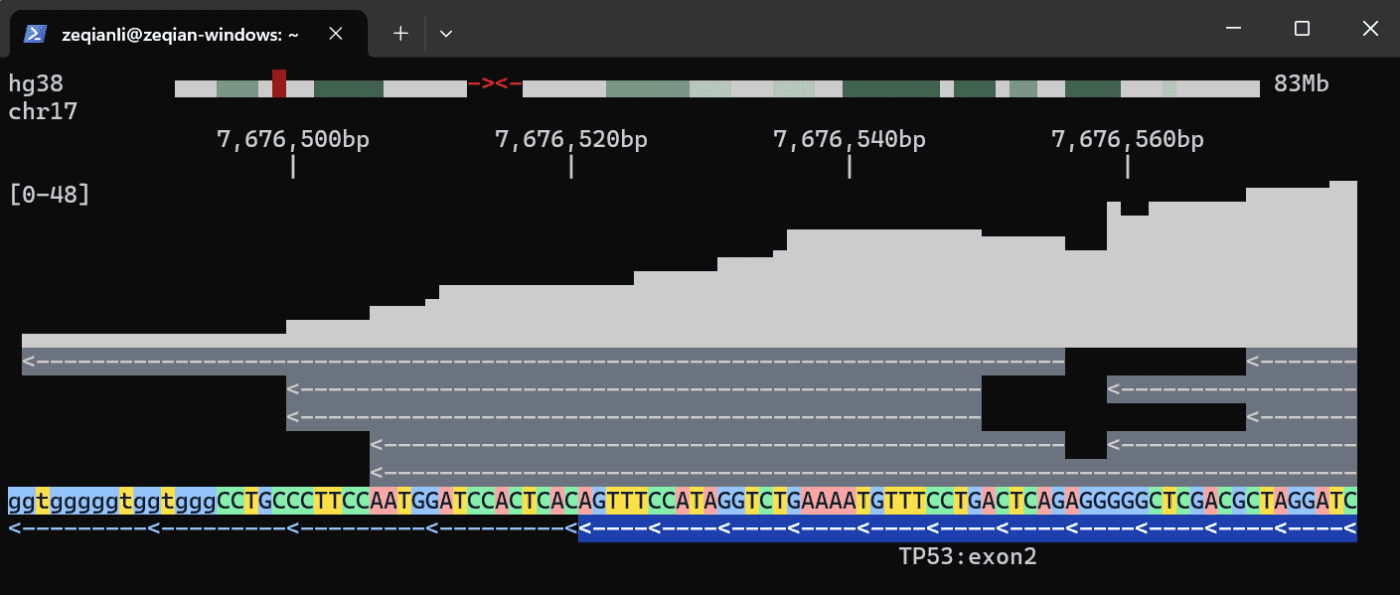
tgv (Terminal Genome Viewer) is a fast genome viewer that runs entirely inside the terminal. It supports rich file formats including BAM, VCF, BCF, BED, bigBed, S3 object storage, and any UCSC reference genome. Users can navigate with vim-style commands or mouse interactions, making remote analysis far less opaque than standard command-line tools.
Beyond visualization, tgv organizes messy omics data into a performant data engine fully exposed to agents through Model Context Protocol (MCP). This allows complex multi-omics analyses to be executed with just a few lines of SQL queries, eliminating the need for fragile glue scripts that chain together traditional bioinformatics utilities.
Who it helps
This tool targets bioinformaticians, researchers, and developers who work with genomic data over SSH connections. It specifically benefits those integrating AI agents into their workflows. Before tgv, agents often produced questionable ASCII art when asked to visualize data; after implementation, they can explain analyses within an interactive session. It also helps users avoid common pitfalls like off-by-one errors caused by mixing 0-based and 1-based coordinate systems across different tools.
Getting started
tgv is available through multiple package managers. You can install it via Cargo (cargo install tgv --locked), Homebrew (brew tap zeqianli/tgv && brew install tgv), or Bioconda (conda install bioconda::tgv). Pre-built binaries are also hosted on GitHub Releases.
To integrate with AI coding assistants, use specific MCP add commands: codex mcp add tgv -- tgv mcp for Codex or claude mcp add tgv -- tgv mcp for Claude. Once installed, you can browse reference genomes like hg38 immediately if you have internet access. Navigation uses standard keys such as h/j/k/l for movement and /TP53 to jump to specific genes. For frequent use, downloading a local cache to ~/.tgv is recommended to significantly improve speed.
Limits and costs
The project is currently in early development. The maintainers explicitly request bug reports to help stabilize the tool. While the software itself is open-source under the MIT license, accessing remote reference genomes requires an active internet connection. Performance may vary without a local cache setup. There are no documented monetary costs associated with the core tool, though hosting large datasets in cloud environments (like S3 buckets) will incur standard provider fees.
Source links
Discussion
Share practical experience, questions, or warnings with the community.
Sign in to join the discussion and vote on comments.
Sign in