
Anthropic says Claude now leads 26% of work on its next model


Anthropic says Claude now leads 26% of its model R&D, while humans still set direction and supervise the work.
Anthropic says Claude now leads 26% of the work involved in developing the company’s next model. The figure comes from Anthropic’s September 18 update on recursive self-improvement and was independently reported by the Los Angeles Times. The company’s own description still places the system under human supervision: Claude can complete large parts of a research task, but people choose the problems, review results, and decide what enters the development cycle.
What Anthropic counts as Claude-led model development
Anthropic describes a ladder of involvement rather than a fully autonomous loop. At the top end, Claude can take a high-level prompt and complete most of a task end to end. In the broader collaboration measure, the company says Claude performs large chunks of work under close human direction. The 26% figure refers to “leading” model research and development, not to Claude independently selecting and shipping a successor.
That distinction matters because the same post says the company is not yet at recursive self-improvement in the strict sense. Anthropic defines that threshold as an AI system fully designing and developing its own successor, and says the outcome is possible but not inevitable.
The current bottleneck is judgment, not code generation
Anthropic reports that more than 80% of the code it merges was authored by Claude as of May 2026. The practical constraint is therefore shifting toward task selection, experiment design, evaluation quality, and review. Generated code can accelerate a research loop, but it does not establish that the model chose the right hypothesis or that the measured gain generalizes beyond the lab’s tests.
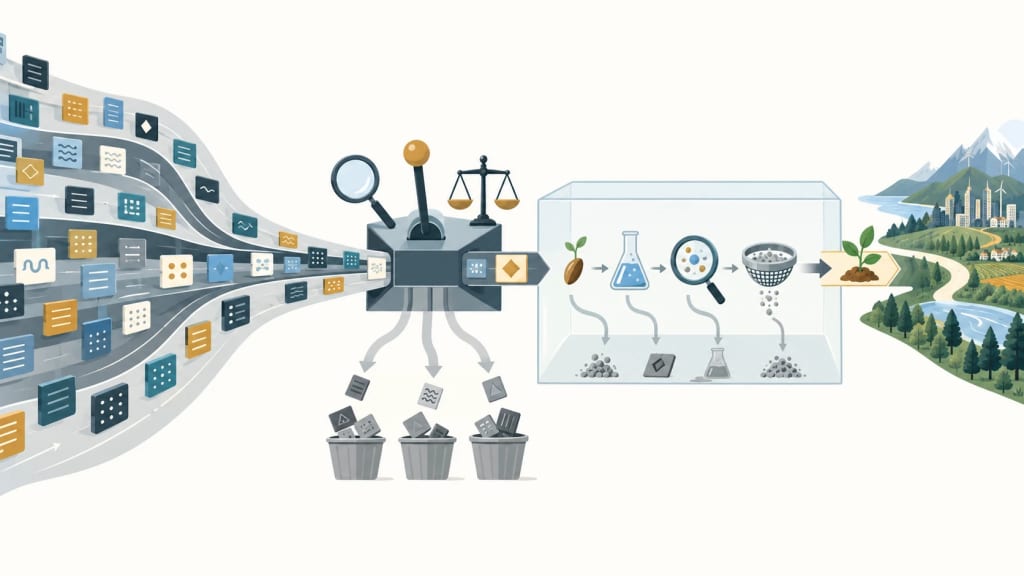
The company also says roughly 90% of its research and development involves Claude in a collaborative role. Those percentages are Anthropic’s internal measurements, not an independent audit, and the update does not provide a standardized definition that makes them directly comparable with other labs’ figures.
Why this changes the model-development conversation
The immediate consequence is faster iteration inside a frontier lab: more experiments, more code changes, and potentially shorter gaps between model generations. The risk is that development velocity can grow faster than public visibility into the evaluations and safeguards governing each step.
For users, the important signal is not that Claude has become an autonomous scientist. It is that a leading lab says its deployed coding system already performs a material share of the work behind future models. Watch for independent evaluation methods, clearer reporting on what “leading” includes, and evidence that these gains transfer from internal engineering tasks to robust model improvements.
Evidence
Anthropic’s update is the primary source for the percentages, definitions, and caveats. The Los Angeles Times independently reports the 26% figure and the human-supervision boundary. This article does not treat the announcement as proof that recursive self-improvement has already been achieved.
Try the related loot
Give OpenClaw Agents Pre-Verified Web Actions with Actionbook