Use GitHub Issue Fields GA before agents turn triage into guesswork


GitHub Issue Fields are now generally available, adding organization-wide structured issue metadata, public project support, and MCP access for Copilot and other AI tools.
GitHub Issue Fields are now generally available for GitHub organizations. Confidence level: confirmed, with independent coverage still early and mostly derivative. The update matters because issue metadata now has a native organization-level schema that humans, issue lists, project views, and MCP-connected AI tools can share.

What changed
GitHub announced on July 2, 2026 that Issue Fields are generally available for organizations on Free, Team, Enterprise, and GitHub Enterprise Cloud with data residency plans. GitHub says the feature will also ship in GitHub Enterprise Server 3.23.
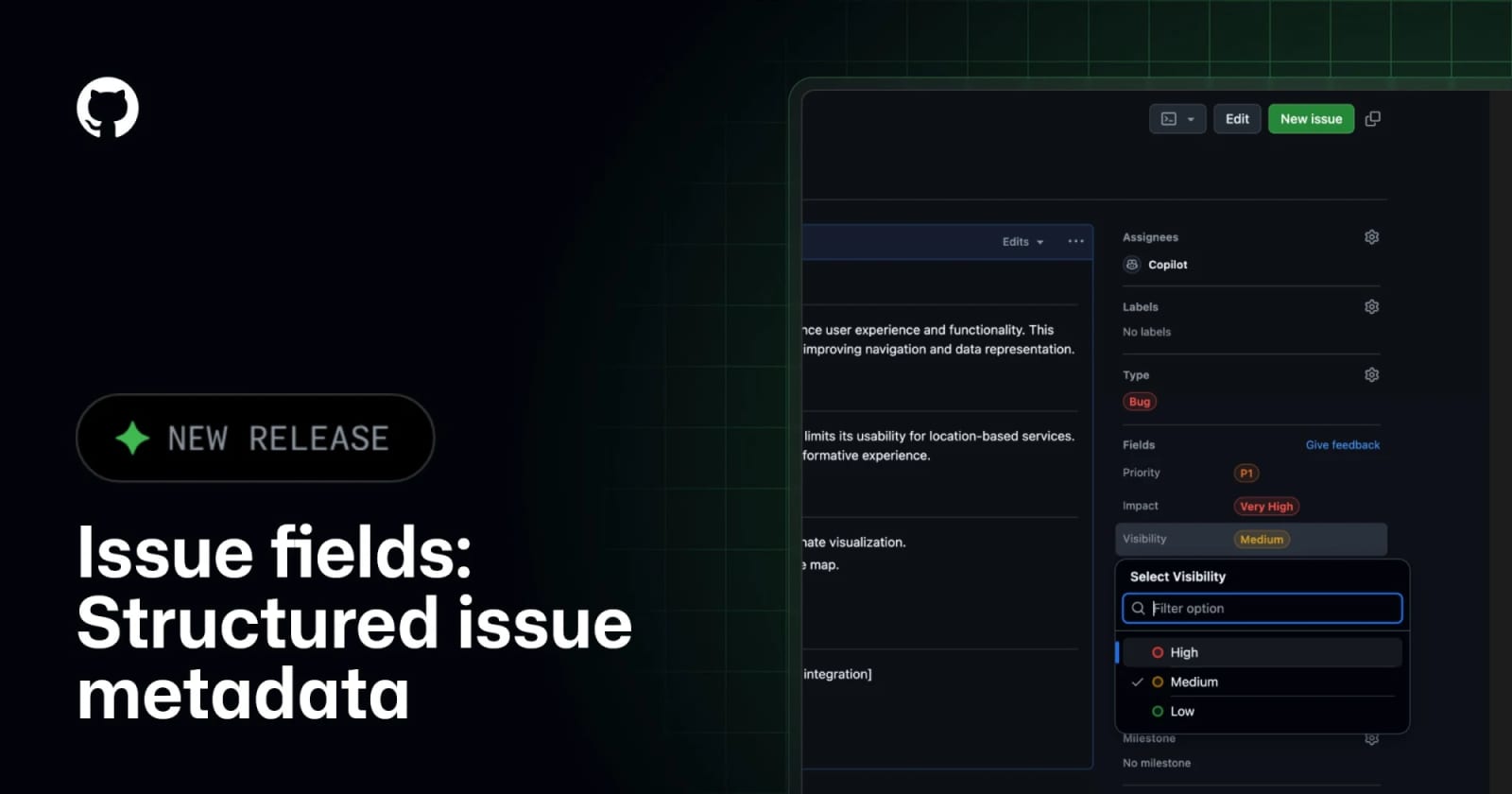
Issue Fields let organization owners define typed metadata directly on issues. GitHub's GA announcement names the default fields as Priority, Effort, Start date, and Target date. The update adds issue-list visibility, public project support, MCP access, internationalized field names, and reliability fixes.
| Feature | Best fit | Access | Caveat |
|---|---|---|---|
| Organization issue fields | Shared priority, effort, dates, area, impact | GitHub org settings | Organization owners manage fields |
| Issue-list display | Fast triage without opening every issue | Repository issues list | Keep field count readable |
| Public project support | Open source roadmaps and public triage | Public fields only | Private fields stay organization-only |
| MCP integration | Copilot and AI tools setting issue metadata | GitHub MCP server | Test agent permissions before rollout |
| Project migration | Moving metadata from project fields to issue fields | GitHub Issues and Projects | Duplicate fields can confuse reports |
Why this is early
This is an official GitHub release, not a rumor. GitHub's changelog confirms the GA status, eligible plans, Enterprise Server target, and the more than 40,000 organizations that adopted Issue Fields during preview.
It is still early operationally because most teams have not cleaned up their label and project-field systems yet. Independent coverage exists, but the public writeups are mostly summaries of GitHub's own changelog. Treat the feature as ready to test, not as a reason to let agents rewrite triage rules without review.
Key takeaways
- Issue Fields move priority, effort, dates, and custom metadata from labels or project-only fields into organization-level issue data.
- GitHub says field values now appear on the repository issues list, which makes triage faster without opening each issue.
- MCP-connected AI tools can read and set issue fields, so agents can create more complete issues and filter existing work by structured values.
- Public projects can use public Issue Fields, while organization-only fields remain hidden from nonmembers.
- Teams should migrate slowly if they already use labels or project fields for the same concepts.
Availability and access
GitHub says Issue Fields are available now for all organizations on Free, Team, Enterprise, and GitHub Enterprise Cloud with data residency plans. GitHub Enterprise Server support is planned for version 3.23.
Organization owners can customize the default fields, add new fields, and configure which fields appear on each issue type from the organization settings area. Before rolling this into production workflows, check the current GitHub documentation for field limits and visibility behavior in your plan.
Practical LinkLoot angle
If your team uses Copilot, GitHub MCP, or any issue-writing agent, define a small field schema before automation scales bad triage. Start with Priority, Effort, Area, Target date, and Customer impact. Then decide which values agents may set automatically and which ones require a human owner.
This pairs naturally with LinkLoot's AI agent tools guide: agents work better when the target system has typed fields instead of ambiguous labels. The useful rollout is a governance task, not a UI tour.
| Rollout step | Do first | Agent rule |
|---|---|---|
| Audit labels | Find labels that mean priority, effort, area, or status | Do not map labels automatically without owner review |
| Create fields | Keep the first schema small | Agents may suggest values, not invent new options |
| Pin fields | Match fields to bugs, tasks, and features | Required fields should have fallback handling |
| Test MCP writes | Use a sandbox repo or low-risk project | Log every automated field update |
| Retire duplicates | Remove project fields only after reports match | Keep rollback notes for dashboards |
What to verify before you act
- Confirm the feature is visible in your organization's Settings > Planning > Issue fields page.
- Check whether your plan, Enterprise Cloud data residency setup, or future Enterprise Server version supports the rollout you need.
- Review field visibility before exposing metadata in public repositories or public projects.
- Test GitHub MCP server permissions with a non-admin agent account before letting tools set fields.
- Compare reports before removing old labels or project-level fields.
Source check
Confirmed by: GitHub's July 2 changelog states that Issue Fields are generally available, names eligible plans, lists the post-preview changes, and points to Enterprise Server 3.23. GitHub's June 18 changelog confirms MCP read/write support for issue fields.
Early signal / context: A Korean developer writeup independently summarized the GA release and MCP angle on July 2. Because that coverage is derivative, LinkLoot treats GitHub's own changelog and docs as the factual base and the independent writeup only as outside context.
Yes. GitHub announced general availability on July 2, 2026 for organizations on Free, Team, Enterprise, and GitHub Enterprise Cloud with data residency plans.
Try the related loot
Scrape Changing Websites with Anansi Self-Healing Selectors and MCP