OpenAI makes GPT-6 Astra its flagship model for long-horizon work


OpenAI's model catalog now positions GPT-6 Astra as its flagship for complex reasoning, coding, research, and agentic workflows, while OpenRouter lists public API access through OpenAI and Azure.
OpenAI's current API model catalog positions GPT-6 Astra as its flagship model for complex reasoning and coding. The model is aimed at long-horizon work: software engineering, deep research, scientific tasks, document creation, and agent workflows that use tools or browsers.
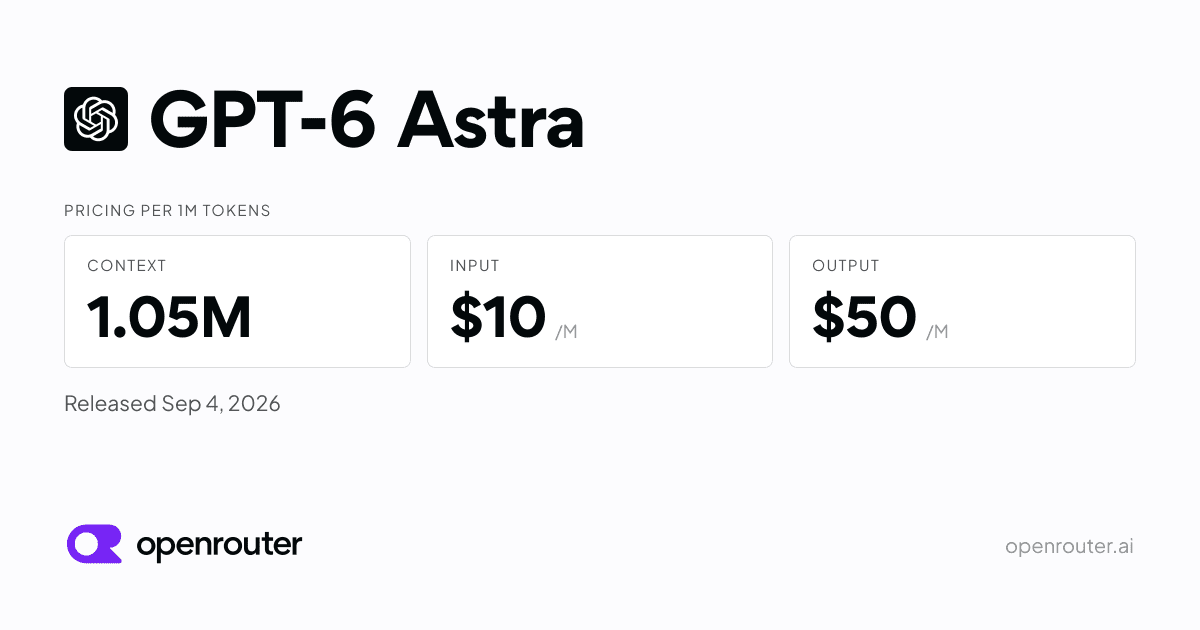
OpenRouter independently lists GPT-6 Astra as an available API model served by OpenAI and Azure. Its model page gives the model a 1.05-million-token context window, up to 128,000 completion tokens, tool calling, structured outputs, and a listed price of $10 per million input tokens and $50 per million output tokens. Those details describe the distribution surface, not a promise that every OpenAI product exposes the same limits.
GPT-6 Astra targets work that runs past a single prompt
OpenAI's catalog frames Astra around complex reasoning and coding rather than a narrow chat feature. The practical change is the combination of a large working context with tool use: an agent can retain more project material, inspect documents, and carry a longer sequence of implementation or research steps before context management becomes the main constraint.
The model accepts text, images, and files such as PDFs, and returns text. The catalog entry therefore fits mixed document-and-code workflows; the release is focused on reasoning and agents rather than a new image, video, audio, or robotics model.
API access is visible through OpenAI and Azure routing
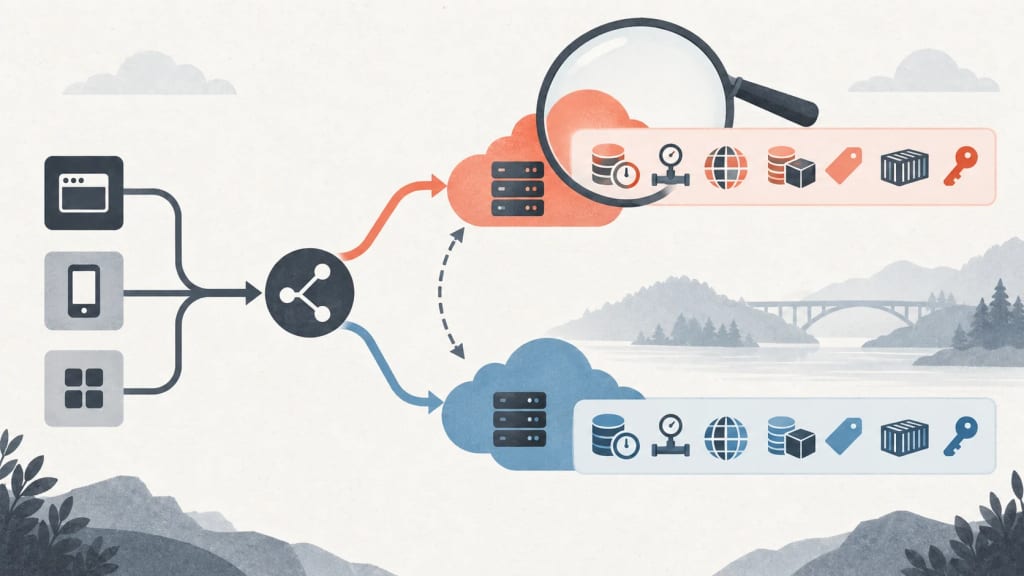
OpenRouter currently reports two providers for GPT-6 Astra: OpenAI and Azure. It also reports automatic provider failover and an OpenAI-compatible API surface. Teams evaluating the model should confirm the provider, data-retention terms, rate limits, and regional availability in the route they actually select.
The public pricing shown by OpenRouter is a useful comparison point, but it should not be treated as OpenAI's complete commercial schedule. Cached input, provider discounts, quotas, and product-specific entitlements can change the effective cost.
What developers should verify before migrating
- Model identifier and lifecycle: use the identifier shown in the current OpenAI catalog and check deprecation or alias behavior before pinning production traffic.
- Reasoning and completion limits: the 128,000-token completion figure is listed by OpenRouter; verify the limit and supported reasoning modes in the direct OpenAI endpoint you plan to use.
- Tool behavior: test structured outputs, browser or computer-use tooling, retries, and long-running state separately. A larger context window does not remove application-level failure handling.
- Cost controls: measure cached and uncached input, output, web-search calls, and provider routing. Set per-project budgets before sending large repositories or document batches.
For implementation patterns around agent context and tool orchestration, the AI workflow automation guide is the relevant LinkLoot starting point.
Evidence
OpenAI's official announcement and model catalog establish the product positioning and supported input/output surface. OpenRouter supplies independent distribution evidence, provider information, public pricing, benchmark context, and the currently listed context and completion limits. Availability and limits can vary by endpoint, plan, region, and provider, so production teams should re-check both surfaces when they move from evaluation to deployment.
Try the related loot
Give Any Model a Sandboxed Shell and File Workspace with OpenRouter