Qwen Releases Image 2.1 With Native Transparency and Multi-Image Editing


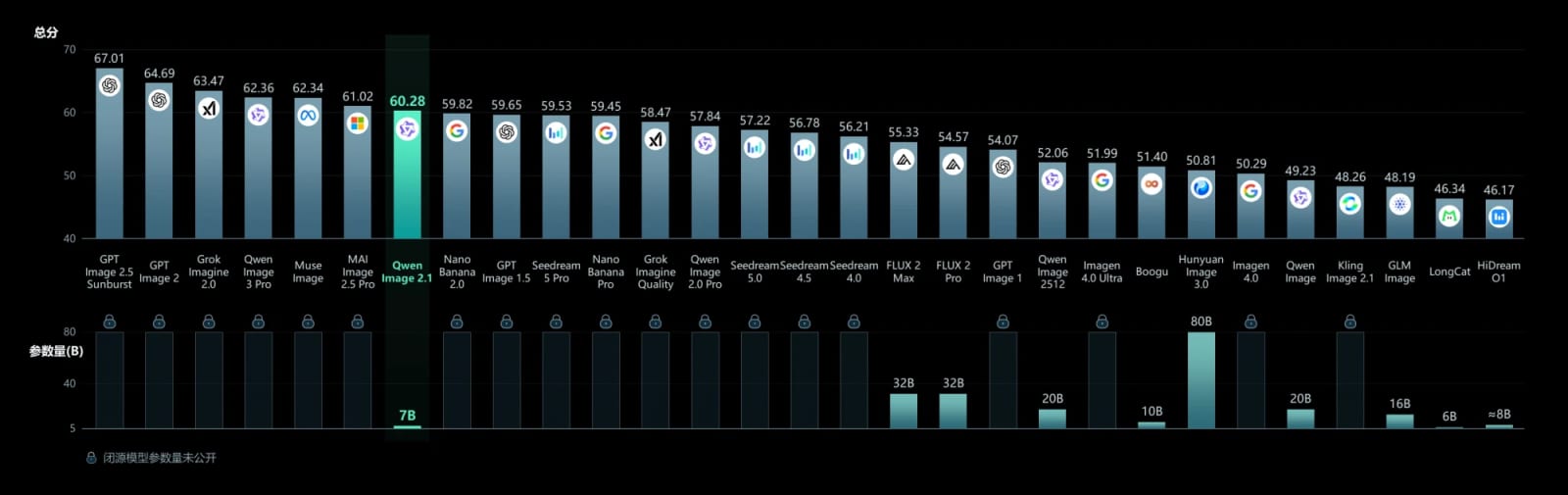
Qwen released Qwen-Image 2.1 on September 20, 2026, with model weights available through Hugging Face and ModelScope. The 7B-parameter visual generation component combines text-to-image generation and image editing in one open-source release, with native transparency and support for up to 10 reference images.
What Qwen-Image 2.1 adds
The release targets a practical gap in open image workflows: creation and editing do not require separate model families. Qwen says the model can generate standard or transparent RGBA images, edit transparent layers, extract subjects from photographs, and apply local changes using circles, painted annotations, or masks.
The model card also describes improved typography, portrait lighting, textures, and fine detail. Qwen positions the architecture as compact and efficient, using mixed-granularity attention and prefix key-value cache reuse. Those are implementation claims from the vendor; the release does not by itself establish comparative quality or speed against every competing image model.
Access, weights, and tool support
The official repository links the release to both Hugging Face and ModelScope. The main Qwen-Image-2.1 checkpoint is published under the Qwen Research License Agreement, so teams should read the license and deployment conditions before using it commercially.
The distribution story is unusually complete for a same-day open-weight release. Hugging Face's Diffusers project merged a dedicated QwenImage21Pipeline covering text-to-image and image-conditioned generation. The Qwen repository also lists day-one support work for ComfyUI, vLLM-Omni, SGLang, and LightX2V. These integrations lower the setup cost, but they do not remove GPU-memory, dependency, or license constraints.
Why the release matters for production image work
Transparent output, reference-image conditioning, and mask-based edits are useful in asset production: product cutouts, layered graphics, localized revisions, and consistent characters or objects. A single checkpoint that handles those paths can simplify prototyping and reduce handoffs between generation and editing tools.
The practical trade-off is infrastructure. Qwen's examples use recent PyTorch and Diffusers builds, and the recommended resolutions are large. Before committing to a local deployment, measure peak memory, generation latency, batch behavior, and the effect of the Qwen Research License on your intended use. For a hosted workflow, verify that the provider exposes the exact Qwen-Image-2.1 checkpoint rather than a similarly named derivative.
Evidence and next steps
This is a model release, not a hosted API availability announcement. The official Qwen repository says the weights are available now, while the Hugging Face integration confirms that the pipeline has landed in Diffusers. Provider coverage, quantized builds, and third-party quality benchmarks may change after launch.
For teams turning the checkpoint into repeatable production work, LinkLoot's AI workflow automation guide is the relevant starting point. The immediate next step is to test the checkpoint on your own reference-image, transparency, and licensing requirements before treating it as a drop-in replacement for a hosted image API.
Try the related loot
Give Any Model a Sandboxed Shell and File Workspace with OpenRouter