Topic

#consumer-tools

Loot, blog posts and adjacent themes connected to this topic. Follow the tag to keep it in your orbit.

#consumer-tools
Loot

More from this topic

Explore all loot

Filter Amazon pseudo-brands before you buy with Knockoff

0
#browser-extension#shopping#consumer-tools#privacy#open-source
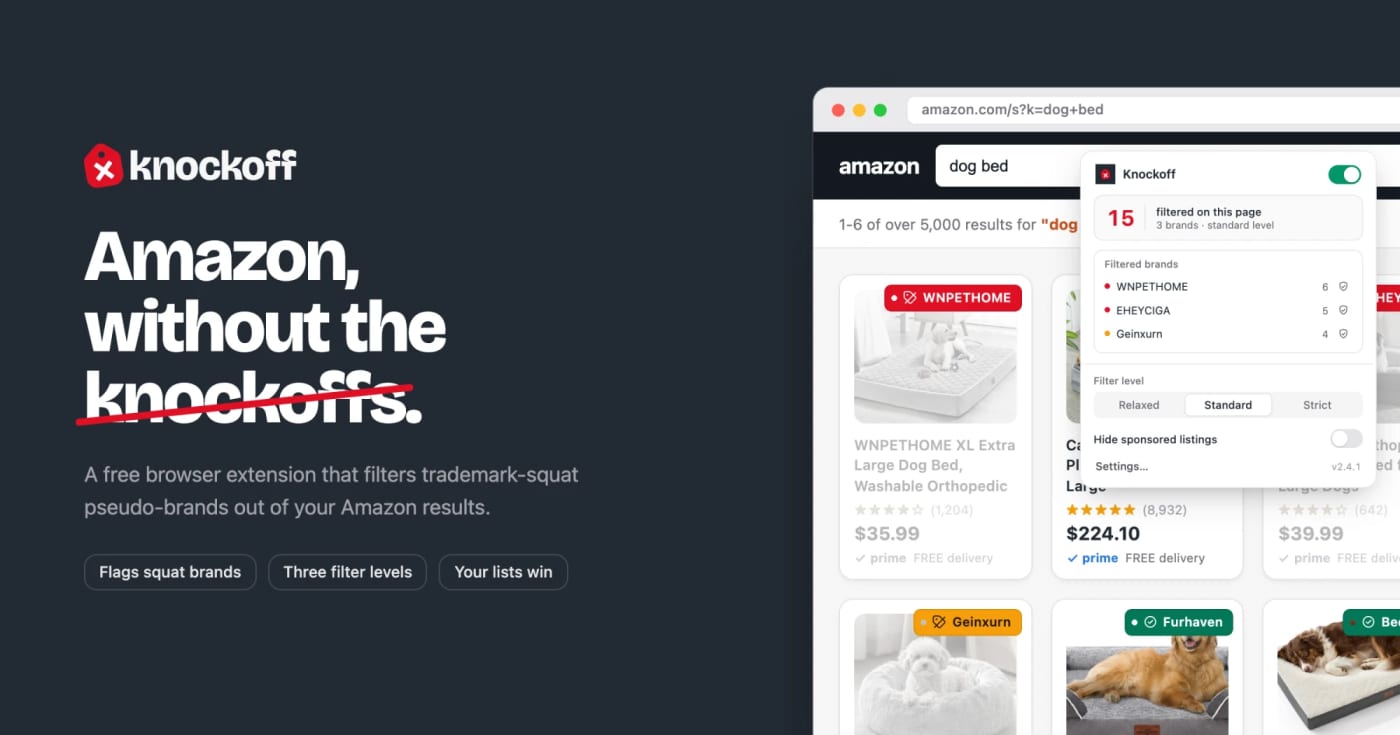
Knockoff is a free Chrome and Firefox extension that labels, dims, or hides suspicious Amazon pseudo-brands locally in the browser. Knockoff is a practical shopping filter for Amazon search results. It helps remove the random-letter pseudo-brands that crowd commodity categories, while leaving recognized brands visible and giving users an override when the verdict is wrong. The extension runs its checks locally in the browser. Its public docs describe a pipeline that starts with personal allow/block lists, then known pseudo-brand and known-brand lists, then name heuristics for all-caps strings, low vowel ratios, consonant runs, and other trademark-squat patterns. Users can choose relaxed, standard, or strict filtering, and filtered listings can be hidden, dimmed, or only labeled. This belongs in Loot because it solves a specific buying problem immediately: less time opening suspicious product listings and fewer accidental purchases from disposable storefront brands. It is also useful as a reference implementation for builders working on browser-side classification, user-overridable heuristics, and privacy-preserving extension UX. Best fit Amazon shoppers who want fewer unknown marketplace brands in search results. Deal hunters who need a quick first-pass filter before comparing prices. Browser-extension builders studying local-first classification and user overrides. Teams researching consumer trust tools without sending every page view to a server. Caveats before relying on it The detector is heuristic, so false positives and false negatives are possible. Strict mode can hide legitimate brands that are not in the known-brand lists. It is not affiliated with Amazon and should not replace normal seller, warranty, and review checks. The repository uses a functional-source style license that converts to MIT later, so check the license before reusing code.
View
Free
Open
Blog

Related reads

Browse blog
No blog posts for #consumer-tools yet

There is no published article with this tag right now. Browse the blog for adjacent themes or follow the tag for future updates.