Explore Lunar Remote-Sensing Data with the NASA-IBM Foundation Model
An open lunar remote-sensing foundation model with public weights, code, datasets, and benchmark resources for crater mapping, volcanic-feature analysis, and polar-ice research.
What you get from it
What this resource is
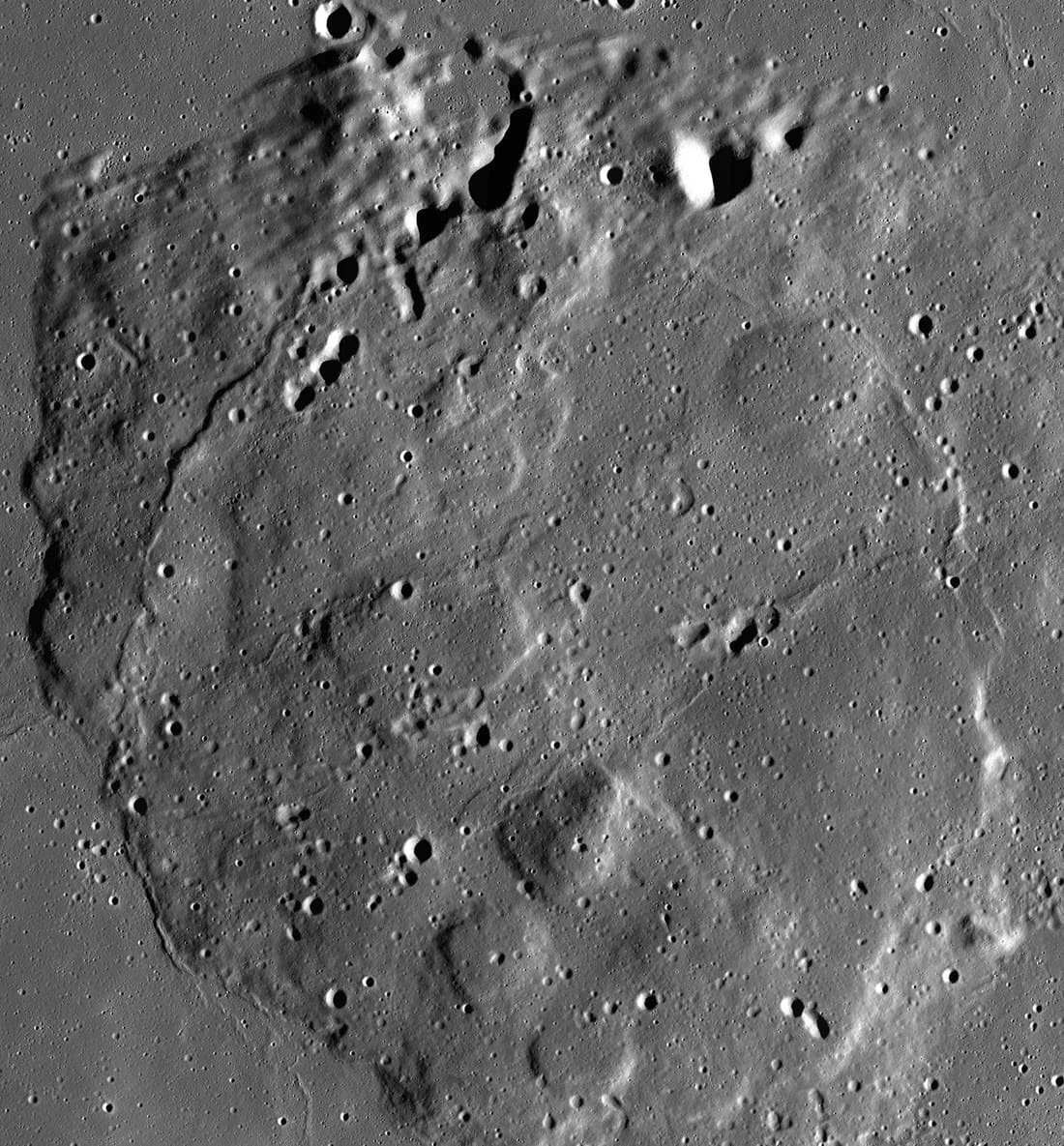
The NASA-IBM Lunar Foundation Model is an open multimodal model for lunar remote sensing. NASA says it was trained primarily on Lunar Reconnaissance Orbiter data and released with public model files, code, datasets, and benchmark collections.
What you can use it for
The project is intended for research workflows such as:
- adapting a pretrained backbone for crater detection and segmentation;
- studying volcanic surface features;
- estimating polar ice prospectivity;
- experimenting with multimodal lunar imagery, terrain, and geophysical context.
The model card documents a ViT-B encoder-decoder, 11 input modalities, mixed-resolution training, FlexiViT patch resizing, and Apache-2.0 licensing. Fine-tuning examples use TerraTorch.
Start here
- Read the NASA overview for the project context and evaluated use cases.
- Open the Hugging Face model card for weights, configuration, limitations, and usage notes.
- Use the NASA-IBM GitHub repository for fine-tuning code and configs.
Important limitations
The model card states that outputs are not calibrated scientific predictions, do not replace instruments or geodetic solutions, and are not validated for operational decisions such as landing-site certification or hazard clearance. Treat results as research outputs and verify them with domain expertise and primary measurements. This Loot was not hands-on tested and is not a human editorial review.
Sources
Discussion
Share practical experience, questions, or warnings with the community.
Sign in to join the discussion and vote on comments.
Sign in