BrowserAct gets Product Hunt momentum for agent browser automation


BrowserAct is drawing attention as a browser layer for AI agents that need to click, extract, handle logged-in sessions, and recover when real websites block simple automation.
Direct answer
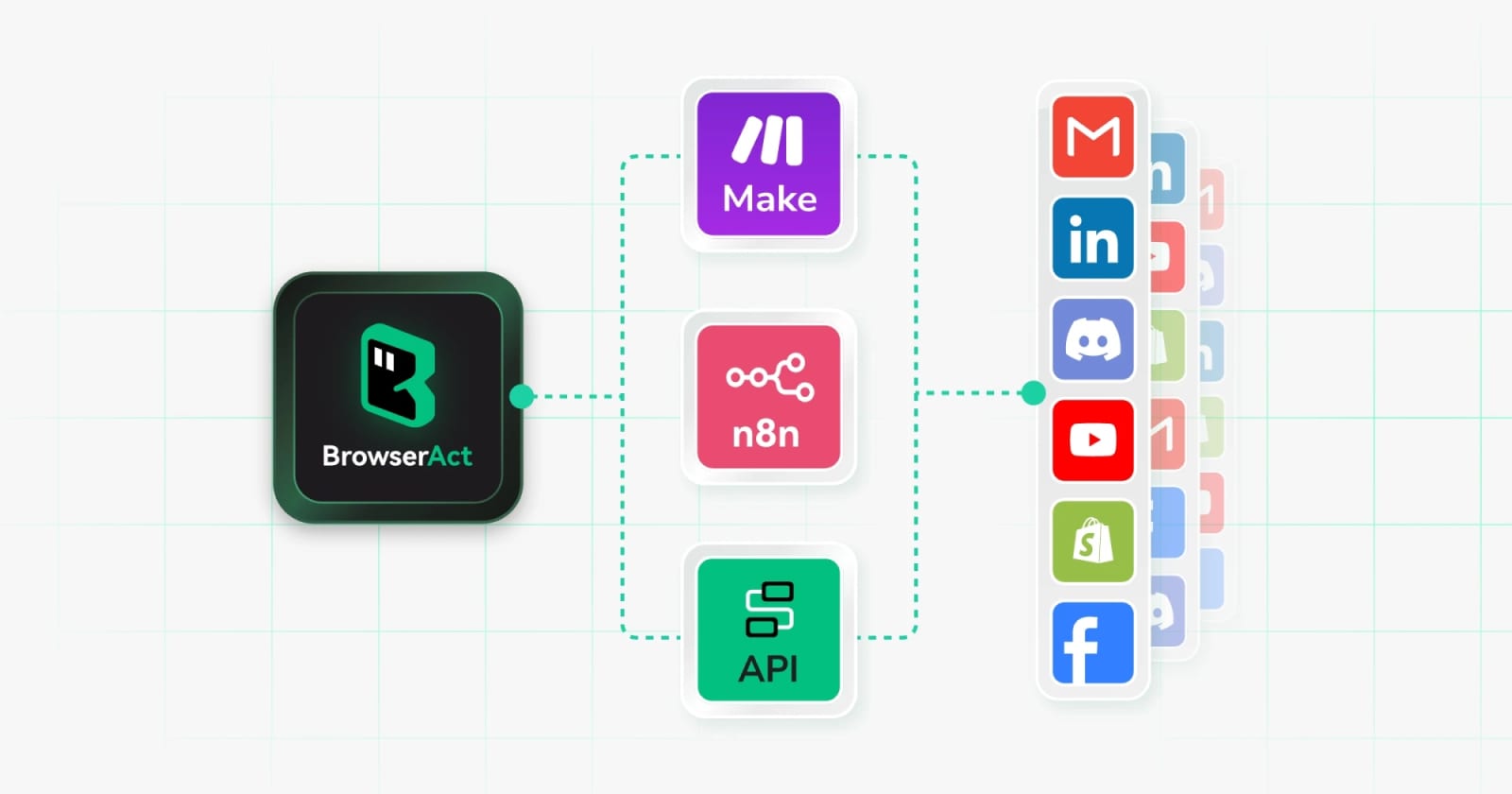
BrowserAct is a browser automation layer aimed at AI agents that need to operate real websites, not just scrape static pages. Its official materials describe browser actions, clean page-state extraction, login/session handling, remote assist for hard stops, and parallel isolated sessions. Product Hunt lists BrowserAct among today's AI and developer-tool launches, while the public GitHub repository describes the CLI as browser automation built for AI agents.
Key takeaways
- BrowserAct targets agent workflows that need clicking, typing, extraction, uploads, logged-in sessions, and repeatable browser tasks.
- The official site claims support for browser modes, semantic browser memory, clean structured output, and confirmation gates for sensitive setup.
- Its public GitHub repository gives an open-source reference point for the agent-facing skill layer.
- Product Hunt momentum makes it worth a quick evaluation, but it does not replace a security and compliance review.
- CAPTCHA and anti-blocking claims need careful policy review before any production use.
Practical LinkLoot angle
The practical question is not "can it browse?" It is whether BrowserAct fits the level of control your agent needs. A research agent pulling public pages has different risk from an operations agent using signed-in sessions, SSO, exports, uploads, or account-specific workflows.
| Option | Best use | Limitation | Source |
|---|---|---|---|
| BrowserAct | Agent-driven browser sessions with actions, extraction, and session reuse | Requires policy review for logged-in sites, CAPTCHA handling, and proxies | Official site, GitHub |
| Browser Use | Open-source browser control for agents | More setup and orchestration may sit with the builder | Product Hunt alternatives context |
| Browserbase | Hosted browser infrastructure | Infrastructure layer, not automatically a full agent workflow | Product Hunt alternatives context |
| Firecrawl | Structured public web extraction | Not meant to drive every logged-in interactive workflow | Product Hunt alternatives context |
For LinkLoot readers, the test is simple: pick one workflow that currently breaks with Playwright, screenshots, or a basic scraper. Try BrowserAct only against a site where automation is allowed, measure success rate, review what data is captured, and decide whether the extra browser layer reduces maintenance enough to justify the risk surface.
What to verify before you act
Review the terms of every target site before using CAPTCHA, proxy, or anti-blocking features. Check whether the open-source skill repository matches the hosted product claims you plan to rely on. If your workflow touches customer data, verify where sessions, cookies, extracted page state, screenshots, logs, and API keys are stored. Treat Product Hunt ranking as discovery signal only; use a sandbox account and a throwaway workflow before connecting production credentials.
Source check
- BrowserAct's official site confirms the product positioning, supported workflow types, browser modes, and official preview image.
- Product Hunt confirms the public launch/listing context and places BrowserAct in AI, productivity, and GitHub-related discovery.
- GitHub confirms the existence and stated purpose of the public BrowserAct skills repository.
BrowserAct is a browser automation layer for AI agents that need to interact with real websites through actions, extraction, sessions, and browser workflows.
For a broader shortlist, compare it with LinkLoot's AI agent tools guide.
Try the related loot
Scrape Changing Websites with Anansi Self-Healing Selectors and MCP